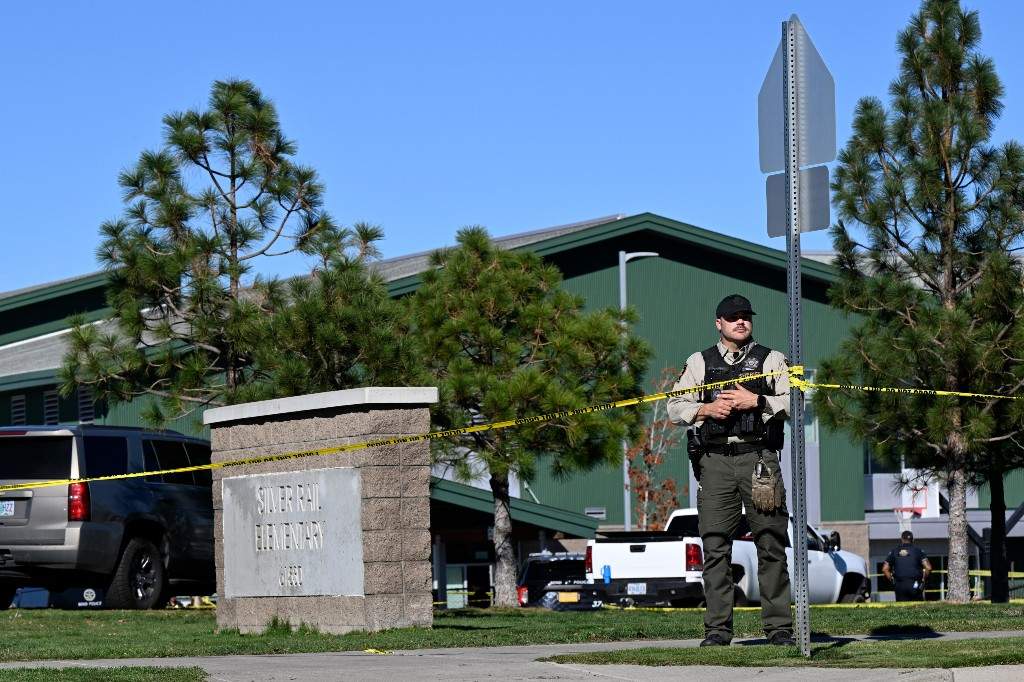
The morning started like any other in the Pacific Northwest. Classrooms buzzed with routine lessons, children whispered over art projects, and teachers managed the chaotic energy of early hours. Then the gunfire shattered that fragile reality. An Oregon elementary school shooting left four people dead, including three young children and a teacher, plunging a tight-knit community into an unimaginable nightmare.
You're reading about this because you want to know how it happened. You're looking for answers in a news cycle that often offers more noise than truth. Let's look at what the reporting actually shows, what law enforcement confirmed, and why school safety conversations keep failing our communities.
The Grim Reality Of The Event
Police and emergency responders arrived at the scene to find a horrific situation. Three children and a single educator lost their lives during the assault. First responders worked frantically to secure the building and treat the wounded, but the sheer speed of the violence overwhelmed standard initial interventions.
This wasn't an abstract statistic. These were classrooms filled with kids who had homework in their backpacks and art taped to the walls. Local authorities scrambled to evacuate surviving students to designated reunification areas, where parents waited in agony for hours.
When you hear about these incidents, the natural reaction is numbness mixed with panic. It's exhausting. Every time a tragedy like this unfolds, the same script plays out on cable news. We get brief moments of shock, temporary political posturing, and then a slow drift back to normal until the next headline drops.
Where Standard Safety Measures Fall Short
Schools across the country spend millions on security upgrades. They install buzzer systems, reinforce front doors, and run regular lockdown drills. Yet, an Oregon elementary school shooting proves that physical hardware alone cannot stop a determined attacker armed with deadly intent.
I've talked to school administrators who feel completely overwhelmed. They're stuck between wanting a welcoming environment for kids and turning campuses into fortresses. Here is the uncomfortable truth: lock the front door, and someone finds a side entrance. Station a guard, and you rely on a single human being to make split-second decisions under absolute terror.
Teachers don't sign up to be tactical response units. They sign up to teach reading, math, and basic social skills. Expecting them to absorb the shock of modern violence is completely broken logic.
The Mental Health Blind Spot Everyone Ignores
We talk endlessly about hardware, doors, and response times. We rarely talk about the underlying human crisis. Perpetrators of school violence rarely wake up and snap out of nowhere. There is almost always a long, agonizing slide of isolation, unaddressed mental health struggles, and digital radicalization.
Communities miss the signs because they lack the resources to handle them. School counselors are buried under caseloads of hundreds of students. Teachers are too busy hitting state testing quotas to notice a kid quietly disappearing into isolation.
If you want to stop these tragedies, you have to fund the boring stuff. You need more social workers, active intervention teams, and real mental health support structures that catch kids before they hit the breaking point.
What Parents And Communities Can Do Right Now
Feeling helpless is easy. Sitting back and waiting for federal legislation to magically fix everything is a recipe for more disappointment. You have to take practical steps locally.
Demand transparency from your local school board regarding actual emergency protocols, not just marketing materials. Know the layout of your children's schools, talk to teachers about their concerns, and push for resources directed straight into student mental health support rather than expensive, cosmetic security theater.
Check on your neighbors. Pay attention to the teenagers and young adults in your orbit who look completely detached from society. Isolation kills, and early intervention remains our best defense.
This nightmare in Oregon leaves behind grieving families who will never have their normal back. Honor their memory by refusing to accept this as just another news cycle that fades away by next week.