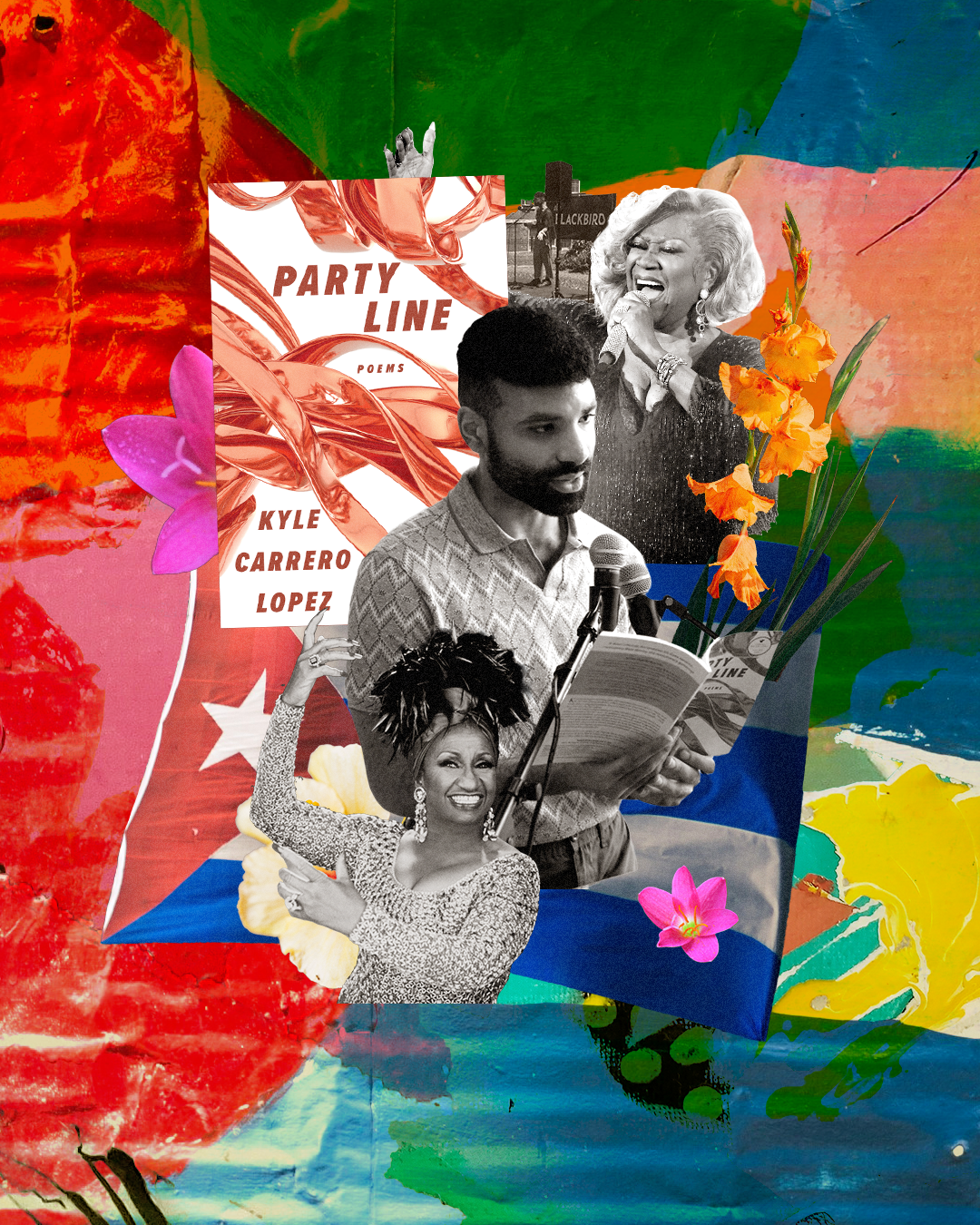
Poetry books rarely arrive wrapped in the scent of spilled gin and heavy bass, but Kyle Carrero Lopez isn't writing for quiet libraries. His debut collection, Party Line, published by Graywolf Press, treats social etiquette as a battlefield where queer Black survival is constantly negotiated. If you expect a polite collection of verses about diaspora longing, you're looking at the wrong book. Lopez merges the sweat-soaked energy of nightlife with sharp-edged political critique, daring readers to reconcile the party girl and the politico inside the same breath.
Born in 1995 to Cuban parents in New Jersey and now based in New York City, Lopez operates at a friction point that most cultural commentary avoids. He is a gay, Black Cuban American poet, scholar, and nightlife host who refuses to flatten his identity into neat, digestible soundbites. In Party Line, he traces how social rules are hammered into children early on. In his poem "Sanctions," he recalls his father—a surly refugee working as a DJ—laying down strict codes of acceptable masculinity. No dance class, no feminine toys, no straying from a rigid gait. The domestic sphere, it turns out, acts as its own blockade.
The Intersection of the Club and the State
Most mainstream narratives paint immigrant communities through a lens of exhausting drudgery or sterile assimilation. Lopez shatters that pedestal by anchoring his work in a festive, dance-fueled culture. His maternal grandfather ran a social club and games parlor in New Jersey, while his mother lived as a dedicated club kid. That lineage runs deep into the basement studio where his father prepped for DJ sets.
Yet Lopez isn't romanticizing nightlife blindly. He holds contemporary club culture accountable for its historical apathy. The iconic club scene of the 1990s often operated as an exclusionary, white supremacist playground where revelers treated escapism as an excuse to ignore structural injustice. Lopez points to the grim reality behind movies like Party Monster, noting that you don't shed your humanity or social responsibilities just because the lights dim and the fog machine turns on. When white partygoers mimic Black hairstyles or adopt black-accents under the guise of festive fun, Lopez calls out the underlying power dynamic immediately. A party fueled entirely by Black music requires basic decency before it asks for anything else.
Navigating the Black Cuban Nexus
Visiting Cuba for the first time in 2017 via the CubaOne Foundation changed the trajectory of Lopez's writing. While the trip offered a vital connection to the island, it also widened his political dissonance with the dominant exile community in the United States, many of whom support rigid economic sanctions. Lopez takes a direct stance on this split. His book explicitly addresses Cuban Americans who aren't trying to destroy their ancestral home, pushing back against the monolithic portrayal of Miami exile politics.
This positioning places him at a complex political nexus. Lopez jokes that he could easily cash in as a right-wing pundit if he wanted to parrot conservative talking points about welfare, borders, and gender. Instead, he leans into the messy reality of political autonomy. He rejects the notion that U.S. policy should seek to subjugate Cuba or turn it into an occupied territory. If critics truly believe Cuba is a failed state, Lopez argues, they should lift all restrictions and see what happens when the island operates unimpeded by hostile foreign policy.
Reclaiming Radicals from Myth
History loves to turn revolutionaries into static monuments or cartoon villains. Lopez refuses this sanitization, closing his collection with the poem "I Saw Assata In Havana." While the encounter is imagined, the portrait is intensely human. Figures like Assata Shakur or the broader panoply of Black liberation activists are often stripped of their daily routines, viewed either as terrifying threats or unreachable icons. Lopez pictures Shakur simply as a regular person buying groceries, grounding legendary defiance in ordinary, everyday persistence.
This perspective drives the engine of Party Line. Change doesn't require a mythical pedestal. It demands ordinary people looking at broken systems and deciding they refuse to accept them anymore. Whether you're navigating customs at an airport, stepping onto the dancefloor, or parsing foreign policy, the rules of engagement remain the same. Pay attention to who holds the power, question the boundaries set for you, and refuse to leave your politics at the door.