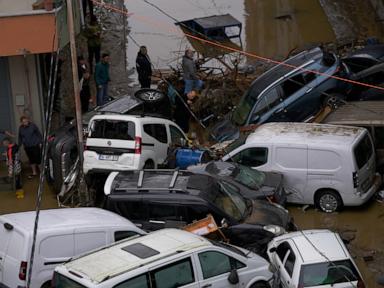
You don't expect a major metropolis to be brought to a complete standstill by water in a matter of hours. Yet, that's precisely what happened when Istanbul faced its worst rainfall in over eighty years. Streets turned into violent rapids. Cars piled up like toys at the bottom of hills.
Four people lost their lives in the disaster. Thousands of properties suffered severe damage. The scale of the catastrophe has left residents and urban planners questioning how a city of sixteen million people could be caught so off guard.
Record Breaking Precipitation
Records go back to 1942. None of them prepared the city for this.
Within a span of forty-eight hours, Istanbul received more rain than its combined historical average for September and October. Governor Davut Gul pointed out that precipitation levels shattered historical benchmarks. Water rushed down hillsides, sweeping away vehicles and flooding homes and businesses across both the European and Asian sides of the city.
The human toll was immediate and heartbreaking. A teenager was electrocuted in the Balat area after stepping into a charged puddle. Other victims included a man whose body was recovered near a park in Kagithane and a sixty-six-year-old man found under a bridge in Sariyer.
The Urban Development Factor
You can't blame nature alone for a disaster of this magnitude.
Critics and officials have started pointing fingers at rapid, unchecked urban development. For years, construction has crept closer to natural waterways and historical streams. Green spaces that once absorbed heavy rainfall have been replaced by asphalt and concrete. When the storm hit, the water had nowhere to go.
Murat Kurum, the minister for the environment, urbanization, and climate change, inspected the hardest-hit neighborhoods like Sariyer's Ayazaga. He admitted that tackling the problem of construction near waterways is essential. With 9,850 reports of damage and 46,000 personnel deployed for cleanup, the government faces massive pressure to rethink how Istanbul grows.
Climate Realities and the Road Ahead
Extreme weather events are no longer anomalies. They're the new baseline.
Minister Kurum explicitly linked the catastrophe to climate change. He noted that combating these shifts isn't optional anymore. Officials are scrambling to upgrade outdated drainage systems and reassess zoning laws before the next heavy storm hits.
Right now, residents are dealing with the messy aftermath. Debris fills the streets. Damaged cars are hauled away. If Istanbul wants to survive future weather extremes, local authorities need to move past quick fixes and completely overhaul the city's drainage infrastructure.