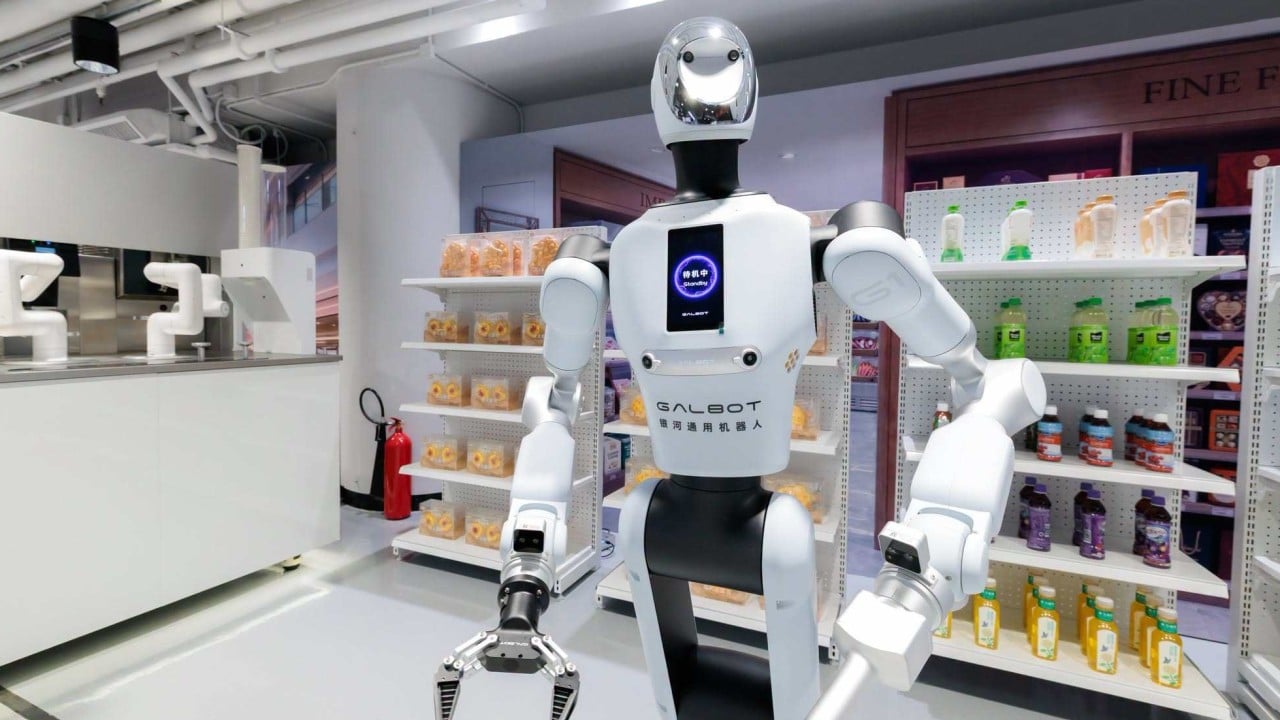
Robots look great in controlled laboratory tests, but real life is messy. A humanoid machine that walks smoothly across a flat, pristine floor will often freeze up the moment it encounters a stray cable, an uneven carpet, or an unexpected human moving in the opposite direction. That gap between shiny demos and actual daily utility is exactly what Hong Kong wants to fix.
On October 15, 2026, the city officially opened its Embodied AI International Applications Hub inside the Hong Kong Productivity Council Building in Kowloon Tong. Initiated by the Hong Kong Industrial Artificial Intelligence and Robotics Centre (FLAIR) and backed by local officials like Innovation, Technology and Industry Secretary Sun Dong and HKPC Chairman Sunny Tan, this new facility gives physical AI a place to practice being useful.
If you've been wondering how the robotics boom is actually shifting from hype to hardware, this is the launch to watch.
What the Hub Actually Does
Most people think building a smart robot is purely about writing clever software code. Honestly, that is only half the battle. Embodied AI refers to artificial intelligence that lives inside a physical body, whether that is a bipedal humanoid, a quadruped dog, or a specialized service unit.
The new hub doesn't focus on inventing base code from scratch. Instead, it serves as a downstream testing ground. It brings hardware makers together with real-world scenarios across five key sectors:
- Manufacturing
- Smart logistics
- Retail services
- Inspection and maintenance
- Public services
The initial phase pairs seven technology partners—including major mainland innovators like Unitree Robotics, Galbot, and Robotera—with eight international scenario partners. When a robotics maker brings a machine to the hub, they aren't just running a routine script. They are throwing their systems into simulated warehouses, retail floors, and public facilities to see where the software fails, where sensors glitch, and how safety protocols hold up under pressure.
The Mainland Connection and Global Ambitions
Hong Kong is playing a very specific role here. Mainland China has plenty of hardware manufacturers pumping out incredible robotic chassis and actuators at breakneck speeds. But scaling those machines for international markets requires meeting different regulatory standards, user workflows, and environmental variables.
Sunny Tan framed the hub as a strategic asset for mainland robotics companies. The core pitch is simple: manufacturers can train and validate their robots for global scenarios right in Hong Kong without having to scatter testing teams across multiple continents.
This facility also builds neatly on top of the city's academic milestones. Back in May 2026, the Chinese University of Hong Kong established the city's first full-stack embodied AI lab to handle deep research. Five months later, the new hub provides the commercial validation pipeline. Research asks if a machine can learn; the hub asks if it can survive a messy shift at a logistics depot without breaking down.
Follow the Money
Ambition without funding usually dies a quiet death. Hong Kong is backing this initiative with serious capital. The Hong Kong Productivity Council is rolling out a 1-billion-HKD injection into its AI subsidy scheme, while the wider government prepares a massive 10-billion-HKD industrial fund focused on artificial intelligence and humanoid robotics.
Local players are jumping in, too. Rice Robotics joined the ecosystem to test real-world robots and even introduced TOMO, a wheel-based humanoid designed for educational settings. When local startups and multinational industrial groups start sharing testing data in a single venue, the feedback loop speeds up dramatically.
What Happens Next
Building a hub is the easy part. Making it genuinely useful is where the real work begins.
The success of Hong Kong's new facility won't be measured by ribbon-cutting ceremonies or press releases. It will depend on whether these companies can turn repeated validation cycles into reliable, cost-effective deployments that businesses actually want to buy. If the hub manages to bridge the gap between lab prototypes and scalable commercial deployment, Hong Kong will successfully carve out a permanent, vital home in the global robotics revolution.