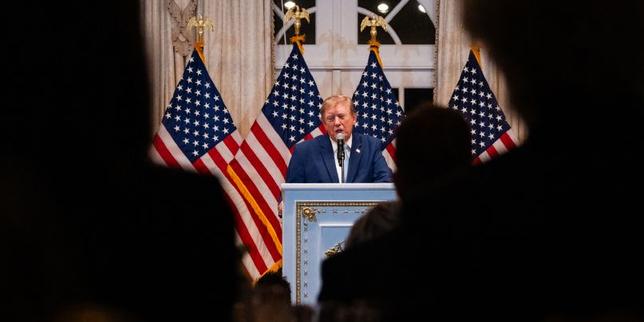
Donald Trump just pulled the rug out from under Washington's own legislative machinery. By signing an executive order waiving major penalties against Moscow outlined in the Lindsey O. Graham Sanctioning Russia and Iran Act of 2026, the White House sent shockwaves across European capitals. Kiev didn't mince words. Ukrainian leadership immediately slammed the move as a direct green light for Vladimir Poutine to escalate military pressure heading into winter.
Politics rarely operates in a vacuum. With midterms looming in the United States, foreign policy decisions are increasingly tied to domestic political calculations. Trump utilized presidential waiver authority to bypass measures that would have heavily penalized Russian energy exports, claiming the restrictions ran counter to American national interests. But behind closed doors, international relations analysts point to a deeper realignment. Importing specific Russian energy products like diesel has returned to the table, reshaping how Washington handles economic warfare against the Kremlin.
The Legislative Clash In Washington
The showdown started in Congress. Lawmakers had pushed through a rigorous package designed to choke off critical revenue streams for Moscow. The legislation targeted the Russian energy sector directly, taking aim at the infamous shadow fleet moving oil across international waters, alongside specific sanctions directed at Vladimir Poutine and key members of his inner circle.
Trump's executive order rendered those teeth virtually toothless before enforcement could truly bite. By invoking national interest waivers, the administration asserted executive dominance over congressional intent. This split highlights a growing chasm inside American political circles over how to handle the protracted conflict. While lawmakers push for total economic isolation of Russia, the executive branch is prioritizing different domestic and economic levers.
Kiev Faces A Brutal Winter Alone
For Ukraine, the timing couldn't be worse. Russian missile strikes continue to pound critical infrastructure, targeting power grids and heating plants to freeze the civilian population out of endurance. Ukrainian officials argue that every signal of western disunity acts as fuel for the Kremlin's war machine.
Compounding the anxiety in Kiev are emerging operational bottlenecks. Ukrainian forces have reported tightening restrictions on satellite communication services, specifically touching systems managed by SpaceX. When frontline military units face logistical and technological squeezes simultaneously with political shifts in Washington, the sense of isolation deepens rapidly. Volodymyr Zelensky and his team are left scrambling to salvage whatever diplomatic leverage remains, pressing international partners in Europe to fill the widening gaps left by shifting American priorities.
What Happens Next On The Global Stage
Moscou welcomed the decision with open arms, labeling the waiver a monumental shift in bilateral dynamics. Yet, the long-term fallout remains unpredictable. European Union leaders are watching anxiously as transatlantic unity frays under the weight of domestic American electoral politics and changing trade strategies.
You can't decouple economic policy from battlefield realities. When sanctions are waived to accommodate energy imports, the message sent to the Kremlin is loud and clear. As the cold sets in across eastern Europe, the diplomatic battlefield is shifting faster than military lines, leaving Ukraine to brace for an onslaught while western allies argue over the rules of engagement.



