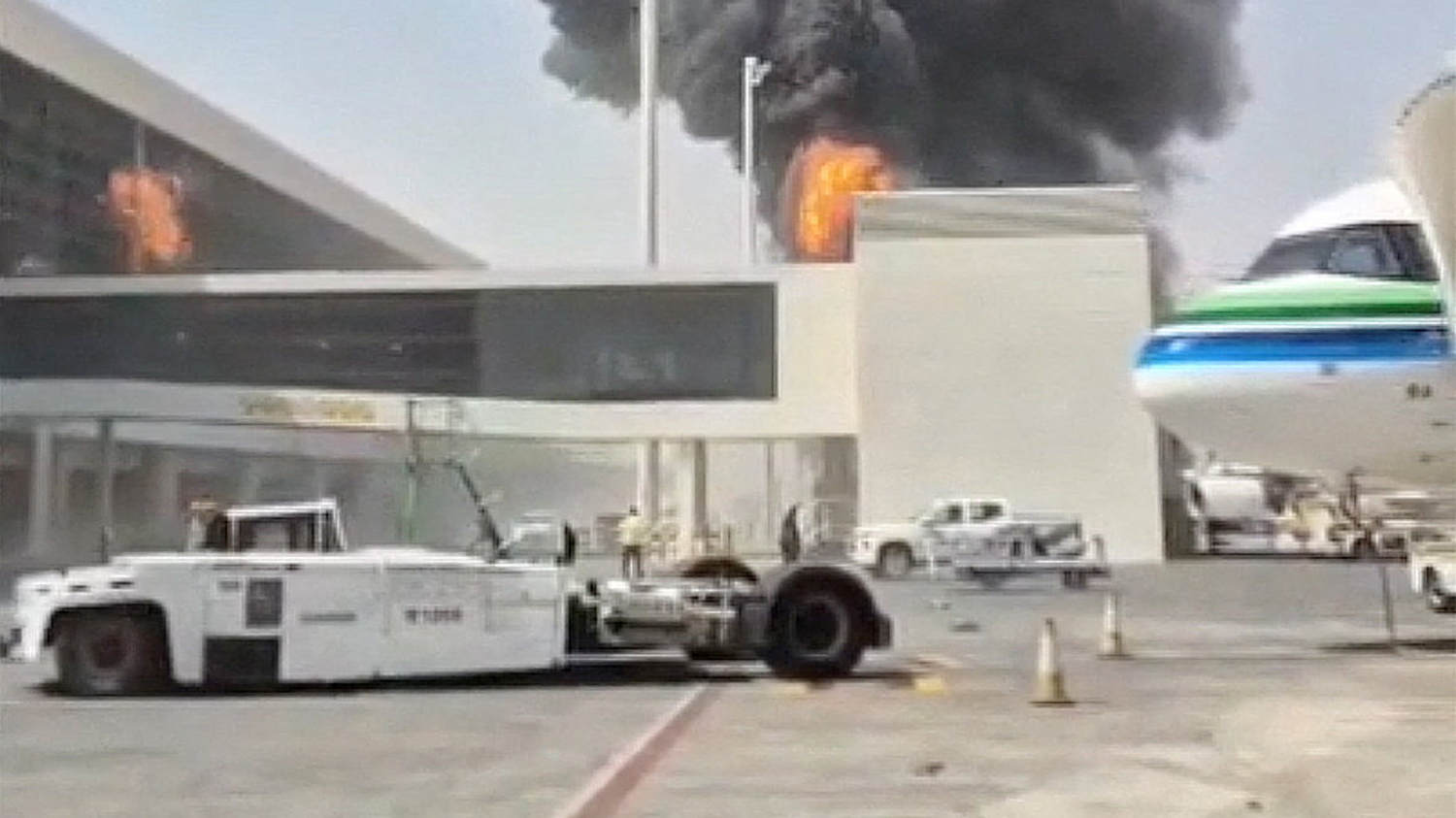
When ballistic missiles and drones target a civilian hub like King Khalid International Airport in Riyadh, the old rules of engagement break down. Thirteen people lost their lives in a brutal weekend strike, leaving hundreds wounded and sending shockwaves through global capitals. This isn't just another border skirmish. It’s a direct assault on the political and economic heart of Saudi Arabia, and it changes everything about how the wider regional conflict will play out.
If you've been watching the news, you know that Yemen’s Iran-backed Houthi movement claimed responsibility for the carnage. But looking past the immediate headlines reveals a starker reality. Civilian infrastructure in the Gulf has become an open target. When an airport terminal closes its doors after repeated hits, the ripple effect hits international travel, commercial supply chains, and investor confidence overnight.
Breaking Down the Riyadh Escalation
Let’s look at what actually happened on the ground. Over a span of several days, King Khalid International Airport faced multiple projectile strikes. The initial barrage proved catastrophic, taking 13 lives—including an American citizen, as confirmed by the U.S. embassy in Riyadh. A subsequent attack the following day added to the casualty count, killing a Pakistani national and wounding several others at the domestic terminal complex.
Why hit an airport? The strategy is clear, even if it defies international law. By targeting high-visibility hubs, the attackers aim to project power far beyond Yemen's borders, testing the limits of Saudi air defense networks and forcing a high-stakes reaction from Washington and its allies.
Western powers didn't stay silent. The United Kingdom, Germany, France, and Spain immediately issued urgent travel warnings, advising citizens to steer clear of Riyadh's main aviation gateway. Meanwhile, regional allies like Pakistan reaffirmed their commitments under joint defense frameworks, with Prime Minister Shehbaz Sharif publicly condemning the violence and standing shoulder-to-shoulder with the kingdom.
The Washington Dilemma
The political fallout in the United States adds another layer of volatility. President Trump weighed potential military responses, balancing the option of joining Riyadh in direct strikes against the Houthis with questions regarding the kingdom's own defense capabilities. While praising Saudi military readiness, the reality remains that high-profile attacks on capital airports expose vulnerabilities that standard defense systems struggle to eliminate completely.
This brings us to a crucial question. Can economic blockades and targeted sanctions curb an axis that relies heavily on asymmetric warfare? Washington has ramped up pressure on financial intermediaries supporting Iran's economy, trying to choke off resources without triggering a wider conflagration with major powers like China. Yet, as the airport smoke proves, economic crackdowns haven't stopped the launch pads from firing.
What Happens Next in the Gulf
You don't need a degree in geopolitics to see where this is heading. When civilian airports turn into war zones, the threshold for massive military retaliation drops significantly. Saudi forces have proven they can fight, but managing a multi-front threat while trying to protect multi-trillion-dollar economic diversification projects is an uphill battle.
The international community faces a narrow window. Either diplomatic channels find a way to enforce accountability and halt the flow of advanced weaponry, or the region slides into an expanded conflict that will disrupt global energy markets and commercial aviation for months to come. Stay alert to upcoming travel restrictions and energy price fluctuations, because this escalation has only just begun.



