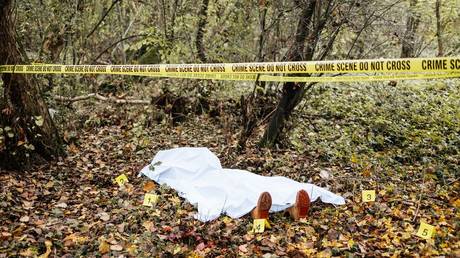
Five bodies found along a short river trail. Months of mounting dread. Now, local law enforcement in Lansing, Michigan, faces a chilling question that no community ever wants to answer out loud.
Could a serial killer be operating right along their city's riverfront?
Police Chief Robert Backus faced the press recently with a sobering acknowledgment. Investigators are actively exploring whether five deaths discovered over the past year along a 1.5-mile stretch of trail near downtown Lansing are linked. When vulnerable populations become targets in a localized area, public safety officials cannot afford to ignore the grim patterns staring them in the face.
Let's look at what the investigation actually reveals, what remains unproven, and why cases involving unhoused victims so often slip through the cracks of early detection.
The Grim Timeline Along the Lansing River Trail
The geography of these discoveries compounds the fear. All five victims—ranging in age from 22 to 70—were believed to be unhoused individuals. Their bodies were recovered between October 2025 and August 2026 along a tight corridor near the downtown area.
When you examine the physical evidence released by investigators, the patterns become difficult to dismiss as random tragedy:
- Four of the victims suffered apparent blunt-force trauma to the face.
- One victim was killed by stabbing.
- Three of the deaths are officially classified as homicides.
- One death remains undetermined pending further tests.
- The final case is still under active investigation regarding exact cause.
Police suspect that some of these assaults happened overnight while the victims were sleeping outdoors. Operating in the dark along isolated stretches of public trails leaves unhoused people dangerously exposed to predators who know the terrain.
Arrests Made But Big Questions Linger
It's easy for rumors to spiral out of control when the phrase "serial killer" enters a police briefing. Investigators want the public to stay grounded in facts while the work continues.
Edward Smith has been charged with murder related to the August 20 stabbing death of 22-year-old Daniel Lusk. Yet, police have not publicly tied Smith to the other four deaths on the trail. Compounding the complexity, another victim, 57-year-old Louis Woodruff, was found severely injured on August 30—after Smith's arrest—and tragically passed away on September 1.
That timeline forces investigators to move carefully. They aren't rushing to pin every unsolved tragedy on a single suspect unless the forensic evidence backs it up.
Why Unhoused Populations Are Tragically Vulnerable to Predators
Serial killings remain statistically rare in the United States, accounting for less than one percent of all murders according to federal law enforcement data. When predatory violence does target transient or unhoused populations, the crimes often take much longer to recognize as a connected series.
Why does this happen?
Transient individuals frequently lack fixed schedules, immediate family members who report them missing within hours, or steady digital footprints. Surveillance footage along public parks and river trails is often sparse or low-resolution. Without eyewitnesses stepping forward, investigators face immense hurdles building a timeline.
Lansing police are trying to shift that dynamic. Officers have ramped up patrols, deployed mobile surveillance units along the trail network, and partnered directly with social workers. Outreach teams are actively working to connect unhoused residents with secure shelter before winter sets in and forces more people out into vulnerable outdoor spaces.
Protecting Public Spaces Without Hitting the Panic Button
Panic never solved a homicide investigation. But heightened awareness saves lives.
If you live in or visit Lansing, staying alert means recognizing how quickly isolated incidents can escalate when communities look the other way. Local authorities need tips, dashcam footage from nearby parking lots, and any information regarding suspicious nighttime activity near the river trail over the past year.
If you have information regarding these investigations, contact the Lansing Police Department directly or submit an anonymous tip through local crime stoppers networks. Share verified updates with your neighbors, check on vulnerable community members who sleep outdoors, and demand that local resources prioritize permanent housing solutions for those living on the margins.



