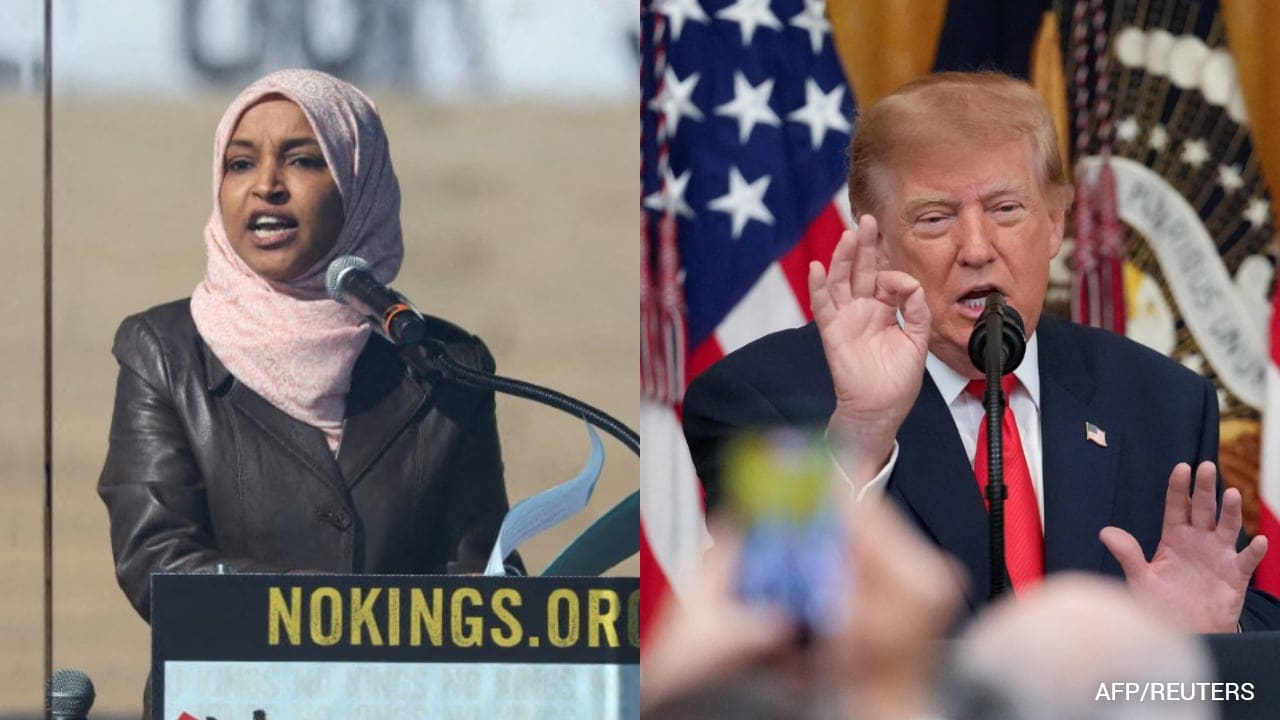
Federal agents didn't just knock on a congresswoman's door this week; they kicked the hornet's nest of American democratic norms wide open.
When Homeland Security Investigations agents descended on the Washington, D.C. area home of Representative Ilhan Omar and hauled away boxes marked as seized evidence, it marked a dizzying escalation in Washington politics. The raid arrived barely three weeks before midterms that will decide control of Congress. It also landed on the heels of relentless attacks from President Donald Trump and Vice President JD Vance regarding the Minnesota Democrat's background and long-disputed family immigration paperwork.
You can't look at this timing and pretend it's business as usual. For decades, the Department of Justice maintained a strict unwritten rule. Prosecutors avoided high-profile investigative steps involving political candidates within sixty days of an election to prevent the appearance of partisan meddling. That guardrail has officially shattered.
The Anatomy of a High-Stakes Investigation
The inquiry centers around old allegations that conservative commentators and administration officials have weaponized for years. Critics have long accused Omar of committing immigration fraud regarding her family history and marriage records—claims the congresswoman has repeatedly slammed as xenophobic smear campaigns and total fabrications.
Homeland Security Secretary Markwayne Mullin dropped heavy hints last month during podcast appearances, telling listeners that an investigation into family immigration paperwork was active and that "something's going to happen." When government officials start previewing criminal searches on political commentators' shows weeks before execution, public trust in neutral law enforcement takes a nattering hit.
Trump distanced himself from the physical raid when speaking to reporters hours later, claiming it's "really up to the DOJ." Yet, at a campaign rally in Ohio on the exact same day, he leaned directly into anti-immigrant rhetoric, telling cheering crowds that Omar "comes from one of the worst countries anywhere on the planet." The crowd's instant chant of "Deport" underscores the intense political polarization surrounding the entire affair.
Breaking Down the 60-Day Justice Department Rule
Why does the timing matter so much to legal scholars? The Justice Department's unwritten policy exists for a simple reason: to stop the state from tilting elections.
When federal law enforcement executes search warrants on a sitting lawmaker running for reelection right before ballots are cast, voters lose clarity on whether an action represents genuine accountability or political intimidation. House Minority Leader Hakeem Jeffries and top congressional Democrats didn't hold back, calling the raid an outrageous abuse of power from a "mass deportation machine" aimed straight at a political adversary.
On the flip side, administration defenders argue that nobody stands above the law. Secretary Mullin stated publicly that if someone falsified entry documents to enter the United States, immigration fraud has no expiration date. That legal technicality forms the core justification for the Department of Homeland Security's current push.
What This Means for the Midterms and Beyond
The fallout from this raid stretches far past Ilhan Omar's legislative district in Minneapolis. It sets a terrifying precedent for how future administrations might treat political opponents.
If executive agencies can target elected members of Congress with public raids right before an election cycle closes, the threshold for political retaliation drops to zero. Omar fired back on social media with a defiant message that she won't be silenced by what she calls a decade-long campaign of intimidation.
You're watching the boundaries between independent law enforcement and political weaponization blur into nonexistence. Whether the seized boxes contain actual evidence of decades-old immigration infractions or just fuel for partisan cable news segments, the damage to institutional credibility is already done. The real test won't be what federal prosecutors find in those boxes, but whether voters still believe the system plays by fair rules when the dust finally settles.



