Geopolitical tensions rarely explode all at once. They drip. They trickle through university visa paperwork, quiet treasury fines, and underground detonation experiments in Nevada. If you only look at presidential summits and handshake photos, you miss the actual mechanics of the current standoff between Washington and Beijing.
Right now, the superpower friction involves everything from algorithmic espionage at leading artificial intelligence firms to sub-surface blast diagnostics. It is messy, bureaucratic, and deeply consequential for anyone operating in global markets.
The Subterranean Battle Over Nuclear Diagnostics
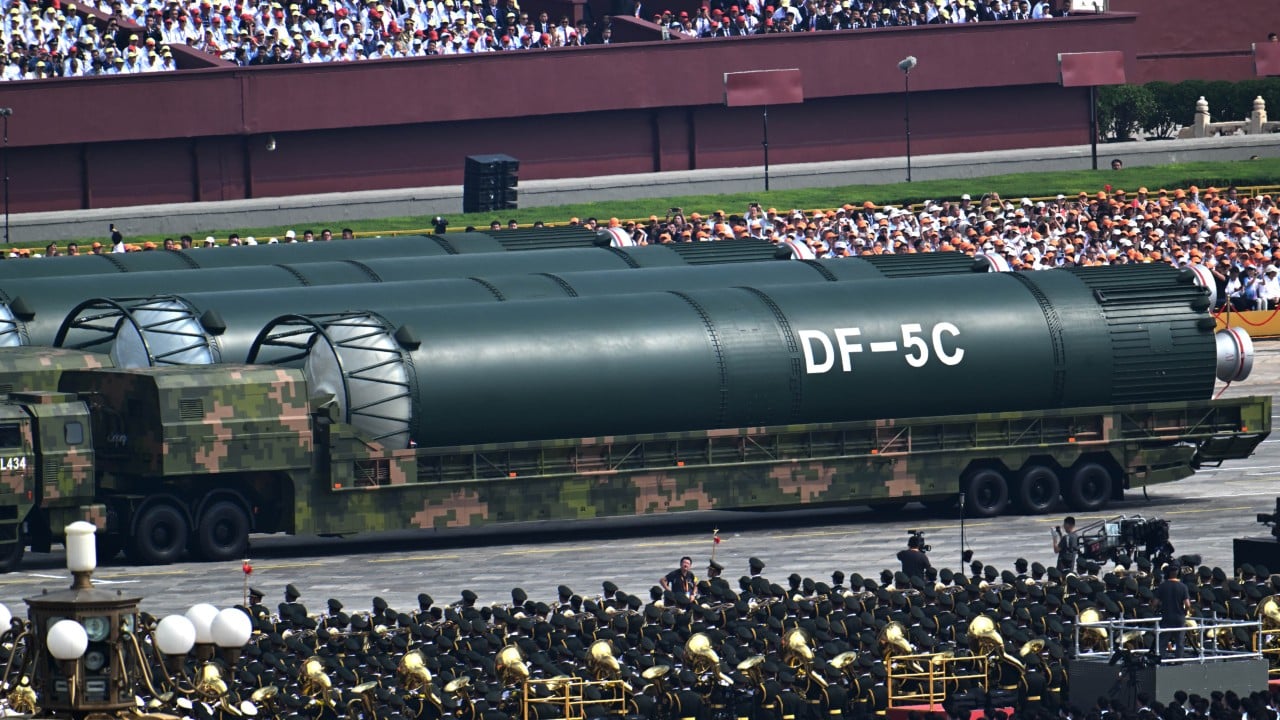
Let us start underground. The United States recently executed a non-nuclear subcritical experiment at its Nevada test site. Officials made no secret of the subtext. They explicitly tied the test to a suspected low-yield nuclear explosion that Washington claims China conducted back in 2020. Beijing denies it completely.
Why does this matter? Because monitoring compliance has turned into an advanced physics arms race. When countries stop atmospheric testing, they move into computer models and subcritical diagnostics. The goal isn't just checking if someone built a warhead. It is about detecting the faint seismic and chemical signatures of tests designed to stay beneath international thresholds.
When nuclear superpowers stop trusting each other's compliance mechanisms, deterrence shifts from mutual assurance to constant suspicion. Every seismic wobble gets scrutinized. Every quiet desert detonation becomes a diplomatic incident.
Academic Campuses in the Crosshairs
Visa paperwork used to be boring. Now it is a geopolitical lightning rod. The federal government launched broad investigations into nine major American universities over alleged J-1 visa fraud, targeting exchange programs and looking closely at how Chinese scholars enter and move through the American higher education system.
Universities have long functioned as open nodes for international research. They trade on collaboration. They hire talent regardless of passport color. But national security officials now view those open doors as structural vulnerabilities.
When you investigate universities for visa compliance, you chill international recruitment. Professors think twice before accepting certain graduate students. Labs shutter collaborative projects. The open global scientific community is fracturing into national security silos.
The Price of Technology Cross-Pollination
Money talks. Sometimes it gets slapped with a US$200,000 fine.
The US Treasury issued its very first financial penalty under newly minted outbound investment screening rules. The target was the parent company of the Plug and Play Tech Centre, which failed to report a small investment in a Shanghai-based robotics and artificial intelligence enterprise.
Two hundred thousand dollars is pocket change for a tech incubator. But the symbolism is massive. Washington is drawing a hard perimeter around dual-use technologies. You can no longer fund early-stage robotics or AI startups in mainland China without tripping federal tripwires.
Venture capitalists used to treat borders as speed bumps. Now they need compliance lawyers just to write a seed check. The era of frictionless tech investing across the Pacific is officially dead.
Inside the AI Labs
The tech war isn't just about money. It is about intellectual property theft happening in real-time.
Former researchers from elite artificial intelligence labs like Anthropic and OpenAI have gone on record warning that state-sponsored actors have already breached domestic AI infrastructure. Former researcher Jacob Coxon recently stated he is ninety percent certain that intelligence operatives from Beijing have moles or digital entry points inside top US AI firms.
Think about that. Billions of dollars go into training frontier foundation models. Companies spend years building proprietary neural architectures. If a competitor can siphon weights and source code through a compromised login or a recruited insider, massive lead times evaporate overnight.
You can put export controls on high-end silicon chips. You can restrict GPU shipments to Hong Kong. But if code can walk out the door on a flash drive or stream through a compromised server, hardware bans lose their punch.
Surveillance Across Borders
Statecraft has a way of reaching ordinary families. Federal prosecutors recently accused Beijing of hiring an American citizen of Chinese origin to track and surveil the family of Taiwan's leader, William Lai Ching-te.
This happened right after high-level diplomatic visits meant to ease tensions. It highlights a brutal reality. Modern state competition does not pause for diplomacy. While diplomats smile for cameras in Washington, intelligence agencies run foreign operations in suburban neighborhoods thousands of miles away.
When intelligence operations target political families on foreign soil, normal diplomatic guardrails dissolve. It turns geopolitics into a deeply personal game.
Where This Leaves Us
The relationship between Washington and Beijing is not heading toward a grand reconciliation. It is settling into a permanent state of managed hostility.
Every university visa audit, every venture capital penalty, and every warning from a whistleblower points to the same outcome. The two economies are decoupling where it hurts most: talent, data, and foundational technology.
If you run a business, manage an academic department, or invest capital, you cannot plan for a return to normal. Normal is gone. You must build your operations assuming that every cross-border connection will face scrutiny, every partnership will require legal clearance, and every digital asset is a target. Protect your infrastructure. Audit your supply chains. Assume the perimeter is already breached.



