People love simple villains. Blaming everything on one man feels tidy, clean, and emotionally satisfying.
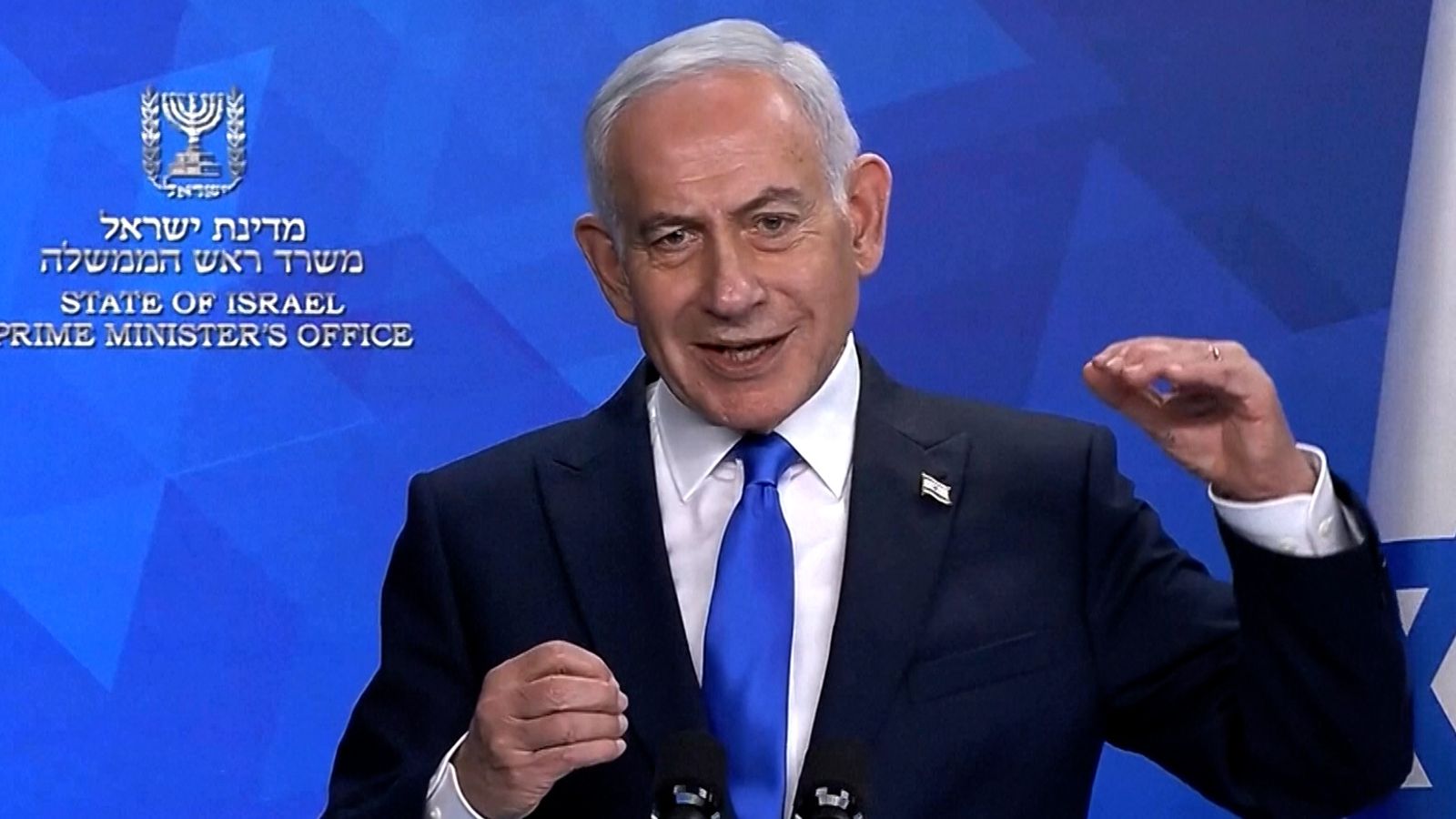
For years, international diplomats, protest movements, and domestic critics have pinned the entire trajectory of the Israeli-Palestinian conflict on a single politician. Benjamin Netanyahu has dominated Israeli politics for decades, serving as both the architect and the face of an increasingly uncompromising security state.
When you look at the mounting pressure he faces, polls showing coalition vulnerability, and the relentless cycle of violence across Gaza and the West Bank, it is natural to ask a comforting question: what happens if he goes? Does his departure alter the landscape for Palestinians, or is the political machinery driving the occupation much bigger than any individual prime minister?
The uncomfortable truth is that pinning structural injustice on one person is a dangerous distraction. Israeli society's rightward drift didn't start with Netanyahu, and it won't vanish the moment he leaves office. The Washington Post has also covered this important subject in extensive detail.
The Myth of the Moderate Alternative
Whenever political analysts discuss a post-Netanyahu Israel, they tend to romanticize the opposition. Centrist and even center-left figures in Israel are frequently marketed to the international community as pragmatic peacemakers waiting in the wings.
History tells a different story.
Look closely at the actual platforms of mainstream Israeli opposition leaders. You will find broad consensus on the core pillars of state security, military dominance, and opposition to a sovereign Palestinian state. Israeli political culture has undergone a massive ideological shift since the Oslo Accords era. The security establishment, intelligence apparatus, and major political parties share a deep-seated resistance to territorial concessions.
If a centrist coalition takes power, the style of governance might change. Expect softer rhetoric, fewer public confrontations with Washington, and perhaps a more polished diplomatic veneer.
Do not confuse tone with policy.
Settlement expansion in the West Bank, military control over checkpoints, and the institutionalized fragmentation of Palestinian communities are sustained by bipartisan bureaucratic machinery. No mainstream Israeli leader is currently campaigning on dismantling settlements, dividing Jerusalem, or handing over full sovereignty to a Palestinian authority.
What Palestinians on the Ground Actually Expect
Talk to Palestinians living in Ramallah, Jenin, or displaced families surviving in Gaza, and you will hear a profound sense of exhaustion with Israeli electoral drama.
To a Palestinian whose home was demolished, whose olive groves were burned by settlers, or whose family member is held under administrative detention, the identity of the prime minister matters very little. The boots on the ground wear the same uniforms. The surveillance drones overhead operate under the same military directives.
During previous changes in Israeli leadership—including the brief tenure of the "change coalition" led by Naftali Bennett and Yair Lapid—violence in the West Bank continued to climb, and the blockade on Gaza remained firmly intact. Palestinians learned a hard lesson long ago. They don't wait for Israeli ballot boxes to rescue them because the entire electoral system treats Palestinian rights as a secondary concern at best, or a security threat at worst.
The Structural Realities of the Occupation
Let's look at the institutional inertia keeping the status quo locked in place.
First, the settler movement has evolved from a fringe ideological project into a powerful, mainstream political force with veto power over government coalitions. Generations of Israeli politicians—regardless of their party card—have enabled the expansion of settlements in the West Bank. Today, over 700,000 settlers live across the West Bank and East Jerusalem. Uprooting this demographic reality requires immense political capital that no current mainstream Israeli leader possesses or desires to spend.
Second, the security doctrine of the state remains absolute. The dominant paradigm dictates that safety can only be achieved through total military dominance, containment, and deterrence. Concepts of regional integration that bypass Palestinian statehood—such as attempts to normalize ties with regional neighbors without addressing the core conflict—have bipartisan backing in Tel Aviv.
Third, the international community often uses Israeli political instability as an excuse for inaction. Foreign capitals endlessly track Knesset maneuvering, coalition arithmetic, and election polls, treating the crisis as a temporary management problem rather than an ongoing humanitarian catastrophe. This obsession with who sits in the prime minister's chair allows global powers to avoid applying real, decisive pressure to alter the underlying conditions on the ground.
Moving Past the Personality Cult of Politics
Focusing entirely on Netanyahu lets the broader Israeli political spectrum off the hook. It transforms a deep-rooted system of apartheid and military occupation into a personal feud between one stubborn leader and his critics.
If public outrage stops at the steps of the prime minister's residence, nothing fundamentally shifts. True change requires dismantling the legal frameworks, economic blockades, and military policies that deny millions of people basic civil and human rights.
Until the conversation shifts from the political survival of one man to the systemic dismantling of the occupation itself, every Israeli election will simply offer a different manager for the exact same system.



