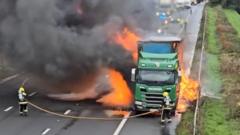
You are sitting on the motorway, engines idling, watching the minutes tick away on your dashboard while a plume of thick black smoke curls into the sky miles ahead. Another lorry fire has shut down the carriageway. It is frustrating, expensive, and entirely too common.
When a heavy goods vehicle goes up in flames on a major artery like the M1, M25, or the A30, the disruption is never just a quick clear-up. It is a multi-hour logistical nightmare involving hazardous materials, melted tarmac, and specialized recovery crews. Understanding what actually happens behind the scenes during these incidents reveals why clearing a burned-out truck takes hours instead of minutes.
The Anatomy of a Motorway Lorry Fire
A commercial truck carries vastly more combustible material than a standard passenger car. Between diesel fuel tanks holding hundreds of liters, rubber tires, brake fluid, and whatever cargo is packed inside the trailer, a lorry fire burns intensely and hot.
When the fire service arrives, their first priority is safety, not traffic flow. Firefighters must suppress toxic fumes and cool down superheated metal components before recovery teams can even touch the wreck. If the vehicle is carrying hazardous cargo or flammable liquids that spill across the road, specialist environmental clean-up units have to be called in. You cannot simply drag a burnt-out 40-tonne vehicle off the tarmac while chemicals are pooling into drainage systems.
Why the Tarmac Needs Emergency Repairs
Drivers often wonder why lanes remain closed long after the flames are extinguished. The answer lies beneath the wheels.
Jet fuel and diesel burns, combined with extreme radiant heat, destroy the road surface. Modern motorways feature specialized asphalt and waterproof membranes designed to withstand heavy weight, but intense heat compromises the structural integrity of the road.
If the fire damages the foundation or melts the surface layer, National Highways cannot reopen the lanes safely. Potholes, uneven joints, and compromised grip can trigger secondary accidents at high speeds. Crews have to plane away the ruined surface, lay down fresh tarmac, and wait for it to cure before cars can roll over it again. That process alone easily eats up four to six hours.
How to Protect Your Journey From Sudden Gridlock
If you drive for a living or commute long distances, getting caught in these unexpected blockades is a massive drain on your time and fuel budget. Relying solely on your car's built-in navigation is rarely enough when thousands of vehicles flood local diversion routes simultaneously.
- Check live traffic feeds before leaving: Before joining major arterial routes, check verified live feeds from national transport agencies rather than relying on delayed radio broadcasts.
- Keep an emergency kit in your boot: Keep bottled water, snacks, a fully charged power bank, and warm layers in your vehicle. Sitting stationary for three hours in freezing or sweltering weather is miserable without basic supplies.
- Know your local bypasses: Familiarize yourself with secondary B-roads running parallel to your regular motorway commute so you can exit safely before gridlock traps you between slip roads.
Vehicle fires will continue to disrupt major transport networks due to mechanical failures, brake overheating, and electrical faults. Knowing why these delays happen does not make the wait any shorter, but it helps you plan around the chaos before you get stuck in the queue.



