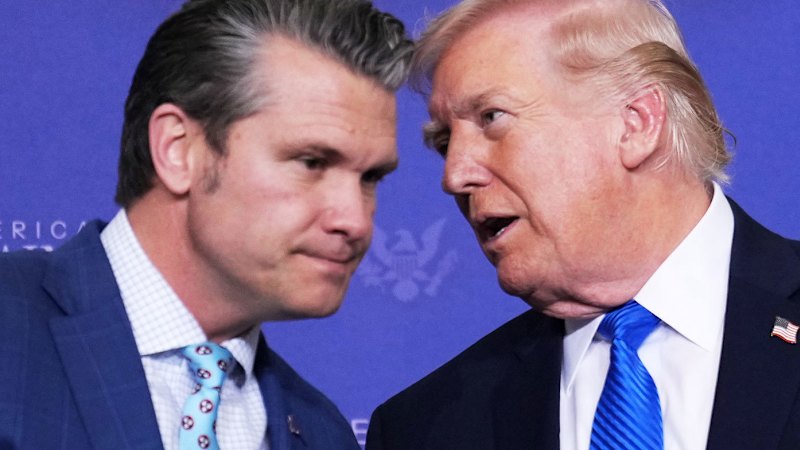
When public policy begins to mirror the gladiatorial spectacles of antiquity, we have crossed a threshold from which it is exceptionally difficult to return. The recent proposal by US Defense Secretary Pete Hegseth to live-stream the execution of Army Major Nidal Malik Hasan—convicted for the devastating 2009 mass shooting at Fort Hood—isn't just a radical departure from penal norms. It is a chilling escalation of political theater designed for an era addicted to digital outrage and voyeuristic punishment.
We need to talk about what happens when state-sanctioned violence becomes entertainment. For decades, the death penalty debate centered on morality, deterrence, racial bias, and the terrifying permanence of executing an innocent person. But the conversation has shifted. Now, we are looking at gamified justice, where the penalty for capital crimes is weaponized as viral media content.
Let's look at the mechanics of what is being proposed. Hasan, paralyzed from the waist down since the 2009 attack that took 13 lives and wounded 32 others, faces a military firing squad. Setting aside the complex legal and ethical questions surrounding capital punishment, the logistics alone expose the bizarre cruelty of the plan. A paralyzed man cannot stand. He must be strapped to a post so that bullets can find their mark. When you add high-definition cameras and global streaming to that imagery, you stop dispensing justice and start staging a public lynching for clicks.
History offers grim reminders of what happens when states broadcast death. Public executions were once standard community events in medieval town squares, drawing crowds of families, children, and vendors. Society eventually outlawed them because they degraded public morals, brutalized communities, and failed to deter crime. Civilized nations moved executions behind prison walls for a reason. Dragging them back out into the digital light via a live stream doesn't project strength. It signals a collapse of institutional restraint.
The political framing surrounding this decision is just as troubling. When pressed on the live-stream proposal, President Donald Trump offered a characteristic shoulder shrug, remarking that he didn't care how Hasan goes as long as he goes. That kind of slippery rhetoric allows leaders to disavow responsibility while reaping the political rewards of bloodlust. It creates an environment where executive voyeurism is normalized, and state violence becomes just another form of content competing for attention on your phone screen.
We are also seeing the consequences of a fractured, reckless penal system elsewhere in the country. Just last week, the botched execution of Christa Pike in Tennessee—where she survived a lethal injection only to wake up with severe brain damage—showed how easily state machinery breaks down. Instead of reflecting on the systemic failures, incompetence, and ethical rot plaguing capital punishment, the current administration leans harder into the spectacle.
Let's be clear about the international optics, too. When a superpower adopts the streaming tactics of terrorist cells or repressive regimes, it surrenders its moral authority on the global stage. You cannot lecture authoritarian governments about human rights while simultaneously broadcasting your own firing squads to the highest bidder on the internet.
The descent didn't happen overnight. It started with political rallies that treated opponents like physical targets, normalized cruelty in public discourse, and eroded the basic guardrails of democratic institutions. Now, the boundary between governance and reality TV has completely dissolved.
If we accept live-streamed executions as normal politics, we forfeit our claim to a civilized society. Stop treating state-sanctioned killing as breaking news entertainment. Demand better standards from elected officials, reject the normalization of political violence, and refuse to tune in when the state turns death into a spectacle.



