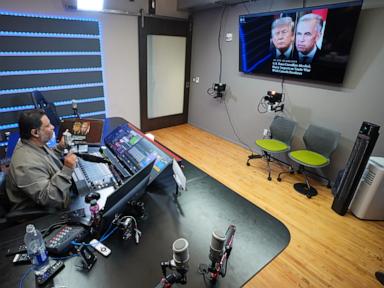
You can hear the exhaustion in Allentown before you even step foot inside a studio.
In Pennsylvania’s Lehigh Valley, where Latinos make up nearly a quarter of the population, everyday economic stress has completely swallowed up political small talk. Victor Martinez, host on La Mega 101.7, spends his mornings listening to callers vent about high fuel costs, expensive groceries, and the stark reality of living day-to-day. When he asks listeners for just one positive thing about the administration, the phones light up with bitter sarcasm or crushing fatigue.
This isn't about abstract talking points. It's about working-class people trying to figure out how to afford their next tank of gas or maintain small businesses in an unpredictable market.
The Ground Zero of Battleground Politics
Allentown is no ordinary backdrop. Located inside Pennsylvania's competitive 7th Congressional District, this region serves as a vital bellwether for national elections. Voters here helped swing the state two years ago, driven by promises of economic relief and lower inflation. More details into this topic are detailed by The New York Times.
Now, midway through a tense political cycle, that initial optimism has curdled into deep disillusionment. Local business owners like Alberto Pena, who runs a Dominican restaurant with his wife in the city, voted for change hoping to see immediate relief. Instead, they find themselves trapped in a cycle of high overhead and flatlining customer spending.
Candidates from both parties are scrambling to adapt. Republican organizations are leaning into messaging centered on faith, family, and direct engagement, while Democrats push community-level outreach like "Bombero Bob" campaigns through local barber shops and eateries. But politicians can't easily spin away the price of a gallon of milk or a monthly utility bill.
Why the Economy Trumps Everything Else
You hear the same sentiment echoing across Allentown's streets. Matt Tuerk, Allentown’s Democratic mayor, points out that the mood on the ground feels stubbornly unchanged from previous election cycles. People want tangible proof that their household budgets are stabilizing, and campaign slogans don't pay grocery bills.
When voters feel squeezed, political loyalty becomes secondary to survival. Some listeners call in threatening to sit out the election entirely, exhausted by the choice between competing promises that haven't materialized in their bank accounts. Martinez often pushes back against that apathy on air, arguing that checking out won't fix high prices or local job scarcity.
What This Means for Upcoming Elections
The frustration pulsing through Spanish-language airwaves in Pennsylvania signals a major warning sign for incumbents. Voters are demanding accountability. They aren't interested in partisan excuses or sugarcoated statistics about national growth when their local neighborhoods are hurting.
If political campaigns want to capture or retain Latino voters in critical swing regions, they have to address economic security head-on. Acknowledging reality beats spinning a fake narrative every single time.
Take a hard look at local district races before casting your ballot. Track how candidates propose tackling local cost-of-living issues rather than listening to national noise, and hold your local representatives accountable at the town hall level.



