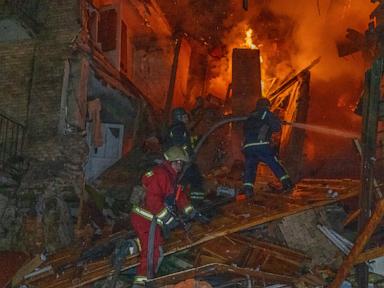
When five ballistic missiles slammed into civilian infrastructure in Kyiv without a single early warning siren, it wasn't just a failure of local detection systems. It was a glaring vulnerability exposed in real time. Ukrainian President Volodymyr Zelenskyy didn't mince words following the attack, pointing out a terrifying reality: international partners failed to provide advance intelligence on the incoming bombardment.
For months, military analysts have warned that Ukraine relies heavily on Western satellite tracking and early-warning telemetry to spot hypersonic and ballistic launches out of Russia. Without that data piped directly into Kyiv's defense network, air raid sirens often sound only after the explosions ring out. That leaves civilians with zero seconds to find shelter.
The Real Cost of Intelligence Gaps
Intelligence data about ballistic launches saves lives. It's that simple. When rockets travel at supersonic speeds, local Ukrainian radar alone faces severe horizon limitations against low-flying or steep-trajectory threats. Western defense networks fill that gap.
So why did the warning never arrive? Rumors and reports have swirled regarding strained communications between Washington and Kyiv. Recent diplomatic friction over energy strikes and strategic disagreements have cast shadows over intelligence sharing. While top Ukrainian officials insist that bilateral cooperation technically continues, a missed warning on a high-profile attack raises questions. Was it a technical glitch caused by a novel Russian weaponry type, or was it a political message?
Foreign Minister Andrii Sybiha tried to calm public anxiety at the Warsaw Security Forum, claiming the delay stemmed from Russia deploying special, hard-to-track weaponry. Yet, the timing couldn't be more suspicious. As political pressure mounts over energy ceasefires and diesel deals, defense coordination is showing cracks.
What Happens When Partners Go Silent
You can't fight a modern war blindfolded. Ukraine's air defense units punch above their weight, but they depend on predictive data to position Patriot batteries and interceptors where they're needed most. If Western allies start withholding or delaying early telemetry, civilian casualties skyrocket.
The recent barrage didn't just hit buildings in Kyiv; it hit the core assumption that Western intelligence shielding would remain uninterrupted. When leaders play political hardball behind closed doors, it's families in apartment blocks who pay the ultimate price.
Fixing the Blind Spots
Relying entirely on external allies for foundational defense data is a dangerous game. Ukraine needs domestic, long-range early-warning infrastructure that doesn't depend on foreign political winds shifting in Washington or Europe. Until then, every unannounced missile strike serves as a brutal reminder of how fragile security really is when outside partners decide to stay quiet.
Take a hard look at how modern conflicts rely on data pipelines. When the data stops, the shields go down. Expect Kyiv to push even harder for direct, unhindered telemetry access in the coming weeks, because flying blind is no longer an option.



