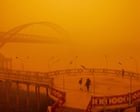
An apocalyptic tangerine haze has settled over parts of Southeast Asia. Millions of people are waking up to air quality indices skyrocketing past hazardous thresholds. Schools are shuttered, flights are grounded, and hospitals are flooded with patients struggling to breathe. In response, Indonesia is turning to a radical experiment. They are dropping dry ice from airplanes to force rain and clear the skies.
It sounds like science fiction. But it is happening right now in South Sumatra.
Almost 900,000 hectares have burned across Indonesia since January. This marks the worst fire season in more than a decade. A brutal combination of a severe El Niño cycle and persistent slash-and-burn land clearing for palm oil plantations has turned the region into a tinderbox. The government faces mounting pressure, including a class-action lawsuit accusing officials of gross negligence.
So, authorities deployed a Cessna aircraft to scatter 1.5 tons of solid carbon dioxide over the city of Palembang. The hope is that dropping dry ice will induce condensation in clouds, trigger downpours, and wash the choking smoke out of the air.
The Science and the Limits of Dry Ice Interventions
Cloud seeding using solid carbon dioxide is not a brand-new invention. Meteorologists have experimented with the technique since the 1940s. The basic premise involves dropping pellets into supercooled clouds to encourage ice crystals to form, which then fall as rain.
However, atmospheric scientists are deeply skeptical about its long-term viability during a massive climate crisis. Rick McRae, an adjunct professor with the bushfire research group at the University of New South Wales, points out the glaring flaw in the strategy. Weather systems move constantly from east to west. If you clear the smoke over one town using dry ice, a fresh wall of toxic smog will immediately blow right back in to take its place.
It offers fleeting, hyper-local relief at best. It is a band-aid on a gaping wound.
The core of the problem lies beneath the surface. Many of these blazes rage in peatland areas. Peat is basically ancient, compressed organic matter that burns underground for weeks or even months. You can dump all the water or dry ice you want from the sky, but until those subterranean peat fires are completely saturated and extinguished, the smoke will keep rising.
A Regional Crisis Without Borders
The choking smog refuses to respect national boundaries. Winds have carried the toxic particulate matter across the Malacca Strait, choking cities in Malaysia and Singapore. In Singapore, air pollution metrics recently ranked the city among the worst globally, prompting the government to roll out financial subsidies for haze-related medical care and distribute N95 masks.
Further afield, Timor-Leste ordered nationwide school closures for three days, urging families to keep children indoors. When environmental disasters cross borders like this, they transform from domestic policy failures into international diplomatic flashpoints.
Indonesian President Prabowo Subianto has ordered a crackdown on individuals and corporate actors suspected of intentionally setting fires. Yet enforcement has historically lagged behind agricultural demands. Economic incentives for cheap land clearing frequently override environmental regulations.
What Actually Needs to Happen Now
If governments want to stop choking their citizens every few years, temporary weather modification tricks will not cut it. Real solutions require confronting the structural drivers of the crisis.
- Enforce Zero-Burning Policies: Governments must crack down heavily on corporate plantations that rely on illegal slash-and-burn methods. Heavy fines and criminal penalties are the only language negligent operators understand.
- Rethink Peatland Management: Indonesia needs aggressive, long-term restoration projects to re-wet dried peatlands. Dry peat is essentially a subterranean coal seam waiting for a spark.
- Build Regional Early Warning Systems: Neighboring nations like Singapore and Malaysia must coordinate directly with Indonesian authorities to share real-time fire tracking data before blazes spiral out of control.
Dry ice drops make for dramatic headlines and show the public that leaders are trying something. But until Indonesia tackles the root causes of its peatland fires, the region will keep choking through every dry season.



