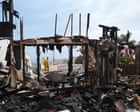
The wind changes direction, and everything shifts in seconds. When the Norte fire broke out across San Clemente and pushed hard into San Juan Capistrano, it didn't just burn land—it tore through neighborhoods, forcing thousands of families to pack their cars and flee into the smoke-choked California air.
Six homes are gone. Two firefighters are recovering from heat-related injuries. And thousands of residents are left wondering how a routine autumn day turned into a desperate evacuation zone so fast.
Let's look at what actually happened on the ground and why these fast-moving events are becoming the brutal baseline of West Coast life.
The Anatomy of a Wind-Driven Blaze
You can't talk about southern California fires without talking about geography and atmospheric pressure. This wasn't a slow-moving timber fire you can easily outrun or cut off with a bulldozer line. This was a wind-driven event fueled by classic Santa Ana conditions.
Dry, warm gusts howling between 50 and 70 miles per hour took embers and threw them hundreds of yards ahead of the main front. When winds move that fast, fire doesn't crawl. It jumps roads, canyons, and firebreaks like they aren't even there.
Orange County Fire Authority Chief TJ McGovern put it bluntly during his briefing: topography and weather dictated the chaotic pace. Crews worked through the night by land and air, but containment sat at a meager five percent while the acreage quickly climbed past 570 acres.
When winds push flames through dry coastal brush at that speed, initial defense is basically impossible. Firefighters have to shift immediately from containment to life safety and structural defense.
The Scramble for Safety and Power Shutoffs
By Friday night, mandatory evacuation orders swept up roughly 6,000 homes, impacting nearly 16,000 residents across San Clemente and San Juan Capistrano. Emergency shelters opened up quickly, but the psychological toll of weather whiplash is heavy. Weeks after coastal storm surges battered parts of the shore, communities woke up to red flag warnings and the acrid smell of smoke.
Utility companies are stuck in a defensive posture, too. To stop power lines from sparking new disasters during high-wind events, Pacific Gas and Electric proactively cut power to tens of thousands of customers across northern California. Statewide, more than 118,000 customers lost power as utilities tried to eliminate ignition sources.
It's a necessary precaution, but sitting in the dark while high winds rattle your windows and emergency alerts flash on your phone is a uniquely stressful experience.
Dealing with the Greater Threat
The Norte fire isn't an isolated incident. Just north of San Clemente, the Henderson fire chewed through more than 3,100 acres across San Diego County, forcing the temporary shutdown of Interstate 5 and pushing emergency crews to their absolute limits.
We're seeing a compounding crisis. Historic weather patterns, erratic seasonal transitions, and dry brush create a powder keg that requires constant vigilance. Red flag warnings are staying in effect across central and northern California, meaning the window of vulnerability isn't closing anytime soon.
If you live in a high-risk zone, don't wait for an evacuation order to figure out your exit route. Keep your go-bags packed, clear defensible space around your property, and monitor local emergency channels closely when the wind starts howling.



