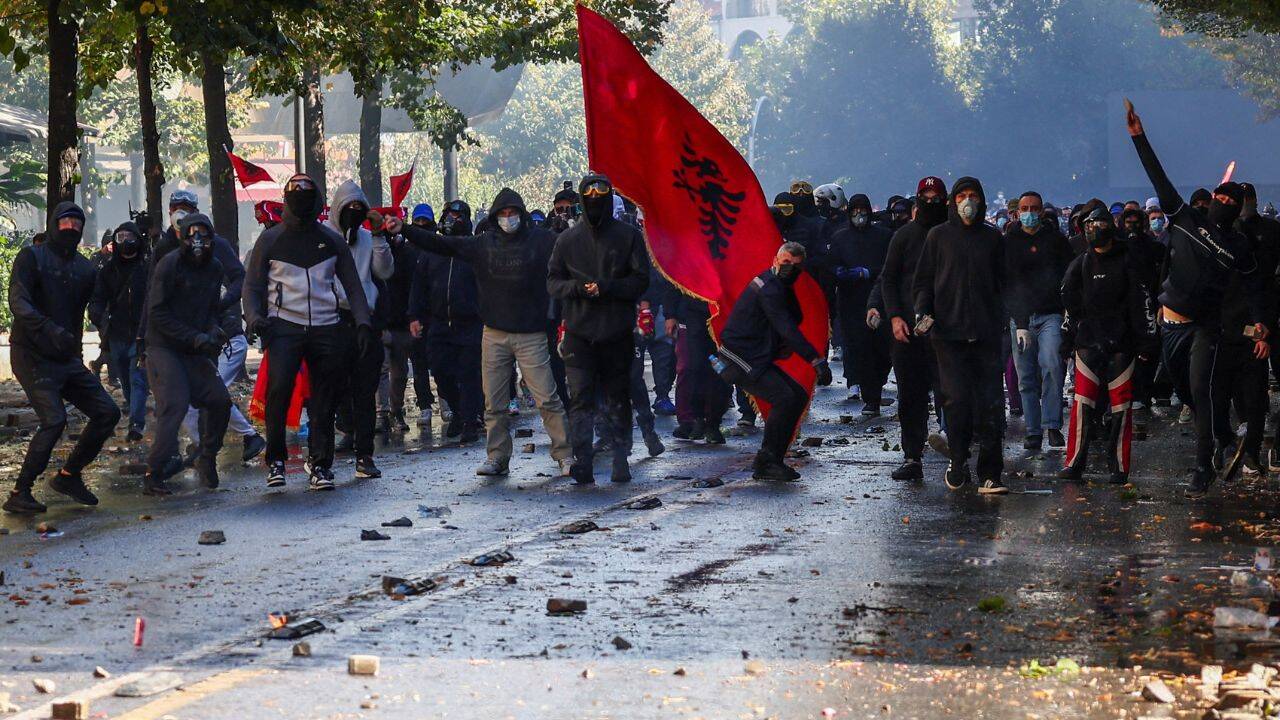
Tear gas fills the air outside the Education Ministry in Tirana. Thousands of furious students chant slogans calling for Prime Minister Edi Rama to step down. What started as localized anger over property disputes has exploded into a full-scale youth movement rocking the core of Albanian politics. If you've been wondering why Tirana's streets look like a war zone right now, the story goes much deeper than standard political friction.
The Spark That Ignited the Streets
Let's get one thing straight. This isn't just about young people blowing off steam. The current wave of protests represents the gravest threat Rama has faced since taking office way back in 2013. His Socialist Party secured a fourth consecutive term in the previous year's elections, looking totally untouchable. But power breeds complacency, and citizens have reached a breaking point.
The unrest didn't materialize out of thin air. For months, peaceful demonstrations brewed over controversial plans to build a luxury resort along Albania's pristine southern coastline. Villagers living in the region sounded the alarm, claiming their ancestral lands were wrongfully sold out from under them to high-powered developers.
Complicating matters further, reports revealed that the individual who sold the contested land faced active prosecution ties to drug trafficking allegations. While high-profile backers like Jared Kushner—son-in-law of US President Donald Trump—have been cleared of any direct wrongdoing regarding the villagers' land dispute, the optics are toxic. Albanians see a cozy alliance between corrupt domestic elites and foreign capital, and they're furious.
Crackdowns and Chaos in Tirana
The situation turned ugly fast. Masked youth groups began hurling rocks at riot police lines guarding government compounds. Security forces didn't hold back. Officers responded with heavy volleys of stun grenades, blinding tear gas, and high-pressure water cannons.
Downtown Tirana has seen running street battles. Protesters smashed building windows and set fires near state structures, creating scenes of total disorder. Police statistics paint a grim picture of the crackdown:
- Around 500 demonstrators detained by authorities
- Approximately 330 of those detained subsequently released
- Roughly 120 police officers injured in the chaos
- At least 45 protesters officially logged as injured, though real medical numbers are likely much higher due to fear of arrest
Rama's administration insists it supports peaceful assembly. Speaking to the public, the Prime Minister vowed to protect the constitutional right to protest while refusing to step down. He framed his mission around national stability and the long-term goal of securing European Union membership by 2030. Critics counter that rampant corruption and institutional rot make that EU dream look increasingly like fantasy.
Deep-Seated Frustrations Beyond the Capital
You can't separate these riots from Albania's wider economic reality. Young Albanians face a brutal combination of soaring living costs, stagnant local wages, and a chronic lack of white-collar career prospects. Brain drain has hollowed out towns across the country for years, as the brightest minds pack their bags for Germany, Italy, or the UK.
Drug trafficking and money laundering networks continue to plague the country's international reputation. Independent analysts note that criminal syndicates frequently launder illicit proceeds through massive real estate developments, fueling soaring housing prices that lock everyday citizens out of the market entirely. When a luxury resort pops up on protected coastline while local families struggle to pay rent, social anger boils over.
This local outrage doesn't exist in a vacuum. Europe is seeing a wider wave of public pushback against economic inequality. In France, high-school students have hit the streets demanding better school funding and more teachers. Over in Spain, housing crises and skyrocketing rents sparked massive demonstrations that forced the government into a corner.
What Happens Next
Rama still commands a solid majority in parliament and maintains firm control over the levers of state apparatus. He isn't going to vanish overnight. However, the youth movement has broken the illusion of quiet stability. When hundreds of young people are willing to face tear gas and police batons day after day, governance becomes nearly impossible to maintain through business as usual.
If the government refuses to address systemic corruption and transparent land reform, these streets will erupt again. The resilience of the student movement proves that a new generation refuses to be ignored. Albania sits at a critical crossroads, and the decisions made in Tirana over the coming weeks will shape the nation's political trajectory for a decade.



