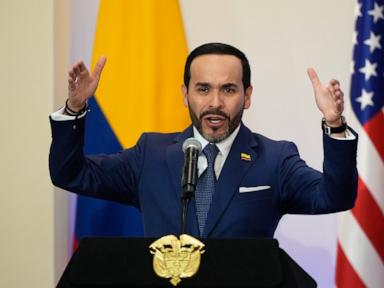
Foreign policy shifts don't usually happen overnight, but Colombia just threw out the rulebook. Bogotá's newly inaugurated embassy in Jerusalem marks an extraordinary about-face, turning the page on years of intense political hostility and friction under the previous administration. When Colombian and Israeli foreign ministers cut the ribbon on the new mission inside the historic Salameh Building on Rabbi Akiva Street, Colombia officially became the 10th country globally to maintain its diplomatic footprint in the Israeli capital.
If you watched Latin American politics closely over the last few years, you know how shocking this turnaround is. Former President Gustavo Petro tore down decades of bilateral goodwill in 2024, formally severing diplomatic relations and ripping up a longstanding free trade agreement over military actions in Gaza. Petro made fiery speeches denouncing Prime Minister Benjamin Netanyahu, leaving ambassadors recalled and economic ties frozen in place.
Now? The political landscape in Bogotá has flipped entirely. Under the newly elected administration led by President Abelardo de la Espriella, Colombia isn't just fixing broken windows—it's rebuilding the house from the foundation up.
Reversing the Petro Era in Record Time
Diplomacy usually moves at a snail's pace, weighed down by endless committees, red tape, and cautious statements. But the bilateral repair job between Bogotá and Jerusalem has moved at breakneck speed. Israeli Foreign Minister Gideon Sa'ar pointed out that within just two months, both governments managed to undo the damage of the Petro years and carve out an entirely new cooperative path.
The swift restoration included more than just a shiny new diplomatic address. On the eve of the embassy opening, both nations officially reinstated their bilateral free trade agreement. That economic lifeline had been unilaterally scrapped by Petro, leaving exporters and business owners scrambling on both sides of the Atlantic.
Bringing back the trade pact alongside the embassy inauguration signals a hard-nosed pragmatic streak in Bogotá. The current administration views international alliances through the lens of security, trade benefits, and intelligence sharing rather than symbolic posturing.
Why Jerusalem Matters for Global Foreign Policy
Most global capitals keep their embassies tucked away in Tel Aviv, dodging the thorny diplomatic minefield surrounding the disputed status of Jerusalem. Palestinians claim East Jerusalem as the capital of a future state, while Israel views the entire city as its undivided capital.
When the United States moved its embassy there in 2017, it sparked a massive international debate. Since then, only a handful of countries—mostly a mix of smaller nations and close allies—have followed suit. By joining that exclusive club of ten, Colombia has staked out a bold, unapologetic position on the global stage.
Colombian Ambassador Tania Gilinski, who took the helm after a three-year vacuum in bilateral representation, noted that relations are moving forward with ironclad determination. For Jerusalem's municipal leaders, welcoming another foreign mission is a major victory. Mayor Moshe Lion has been pushing to expand office space to accommodate a growing queue of international delegations.
Security, AI, and Practical Cooperation
You might wonder what a South American nation and a Middle Eastern tech powerhouse actually talk about behind closed doors. It isn't just diplomatic small talk about peace and stability.
Colombia faces severe, complex domestic hurdles. Transnational drug cartels, domestic terrorism, and organized crime stretch security forces thin. For Bogotá, Israel remains a top-tier partner for hard security solutions, cybersecurity infrastructure, and intelligence collaboration.
Beyond defense, the two governments are setting up joint initiatives linking universities, research institutes, and private businesses. They are pushing hard into artificial intelligence applications designed to streamline public services and boost high-tech exports. Foreign Minister Omar Bula Escobar made it clear during the inauguration that Colombia views Israel as an irreplaceable strategic partner whose cooperation is vital for national development.
What Comes Next for the Region
This sharp shift in Bogotá is already sending ripples across South America. While progressive movements in the region have often aligned against Israel in recent years, Colombia's new conservative leadership is charting a distinctly different course.
Protesters in Bogotá have voiced vocal opposition to the renewed partnership, demonstrating that domestic political divisions over the Israeli-Palestinian conflict remain raw and deeply polarized. Foreign policy is never made in a vacuum, and domestic pushback will remain a factor as the new embassy settles into its West Jerusalem location.
Even so, the practical reality on the ground has changed. Trade routes are reopening, security pacts are locking into place, and ambassadors are back at their desks. Colombia has made its bet, choosing a path of accelerated reintegration and abandoning the isolationist stance of its recent past.



