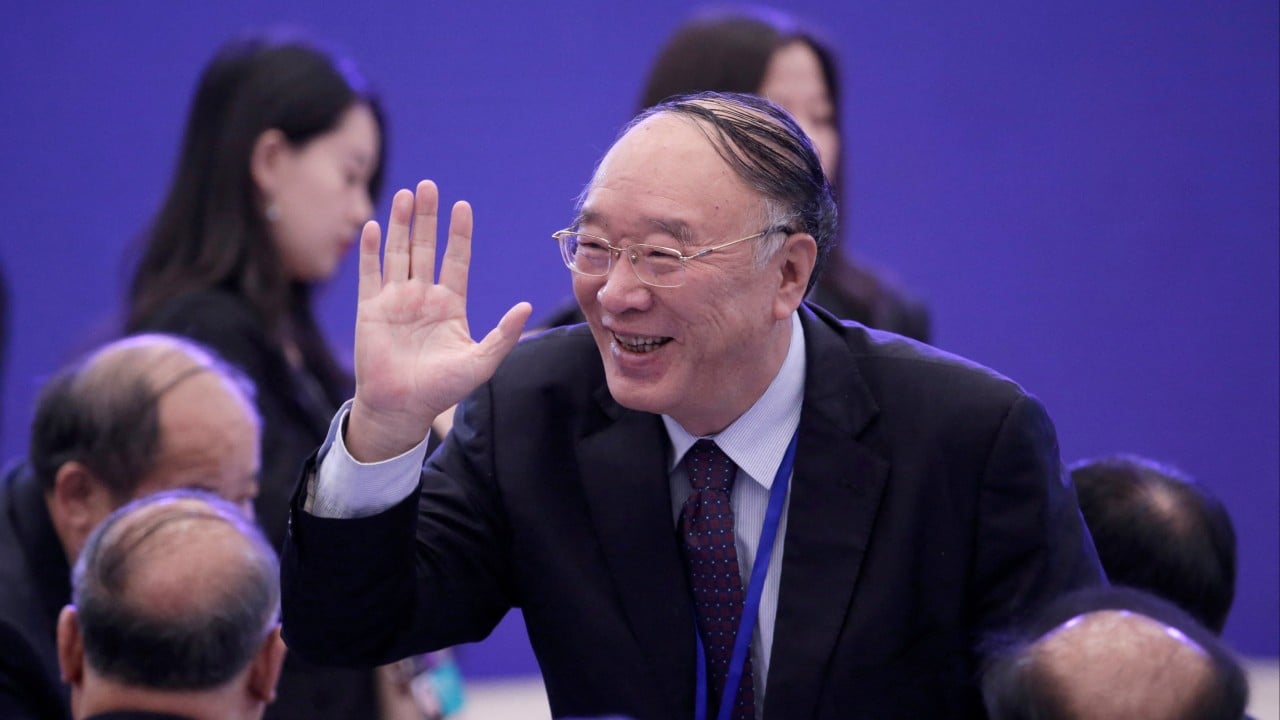
For over a decade, Huang Qifan held a reputation that felt almost impossible in modern Chinese politics. While major political earthquakes flattened his bosses and peers, the veteran official always walked away unscathed. People called him the political tumbler. He weathered the explosive downfalls of Bo Xilai and Sun Zhengcai in Chongqing, shifting smoothly from economic architect to public financial commentator without missing a beat.
That streak just broke.
The Central Commission for Discipline Inspection announced that Huang is under investigation for suspected severe violations of discipline and law. For a man who spent his retirement lecturing university students and offering sharp critiques of national financial policy, the sudden reversal proves a simple truth. Nobody outruns the party's anti-corruption machinery forever.
The Rise of the Financial Mayor
To understand why Huang's downfall matters, you have to look at how he built his career. Long before the corruption probes caught up with him, Huang earned a different nickname across financial circles. They called him the financial mayor.
During his tenure as mayor of Chongqing from 2010 to 2016, Huang gained a reputation for deep technical competence. He didn't just manage a massive interior municipality; he engineered its financial architecture. He pioneered municipal investment vehicles modeled on international sovereign funds and kept runaway property speculation in check through strict land-supply rules and expansive public rental housing programs.
When Bo Xilai crashed out of power in a historic political scandal, Huang famously survived by pivoting instantly, assuring Beijing that he could keep the local administrative machinery running. When Bo's successor, Sun Zhengcai, was later purged and jailed for life, Huang dodged the debris yet again. He retired from active office, stepped into academic roles at Fudan University, and became a prominent voice on China's banking and real estate reforms. He looked like the rare high-ranking official who managed to transition safely into a respected elder statesman of economics.
Why the Shield Finally Shattered
Political survival in Beijing doesn't mean immunity. It often just means a longer runway. In recent years, China's sweeping anti-corruption campaign has increasingly targeted retired officials, financial regulators, and technocrats who once thought their technical value shielded them from scrutiny.
The timing of Huang's investigation carries heavy political weight. As the ruling party tightens internal oversight and clamps down on structural vulnerabilities within state sectors and financial bureaucracies, past associations carry a long memory. Huang's decades-long ascent through Shanghai and Chongqing placed him at the center of massive capital flows, massive infrastructure pushes, and powerful political networks.
When investigators review past economic decisions, technical expertise doesn't override political liability. Even the most capable administrators find that old alliances eventually catch up with them.
What This Means for China's Technocrats
Huang's case sends an unambiguous signal to the remaining ranks of economic technocrats and retired officials across the country. The era of the untouchable fixer is over.
For years, analysts argued that Beijing would spare officials who possessed specialized economic knowledge or kept local economies humming during turbulent times. Huang's career was the primary exhibit for that theory. He knew the numbers inside and out. He could talk circles around financial regulators and offer granular fixes for the property market.
Yet the message from Beijing's anti-graft bodies remains consistent. There are no safe landings, and there are no permanent exceptions for past performance. When the party decides to close the book on an era, even its most resilient survivors find themselves facing the same reckoning as everyone else.



