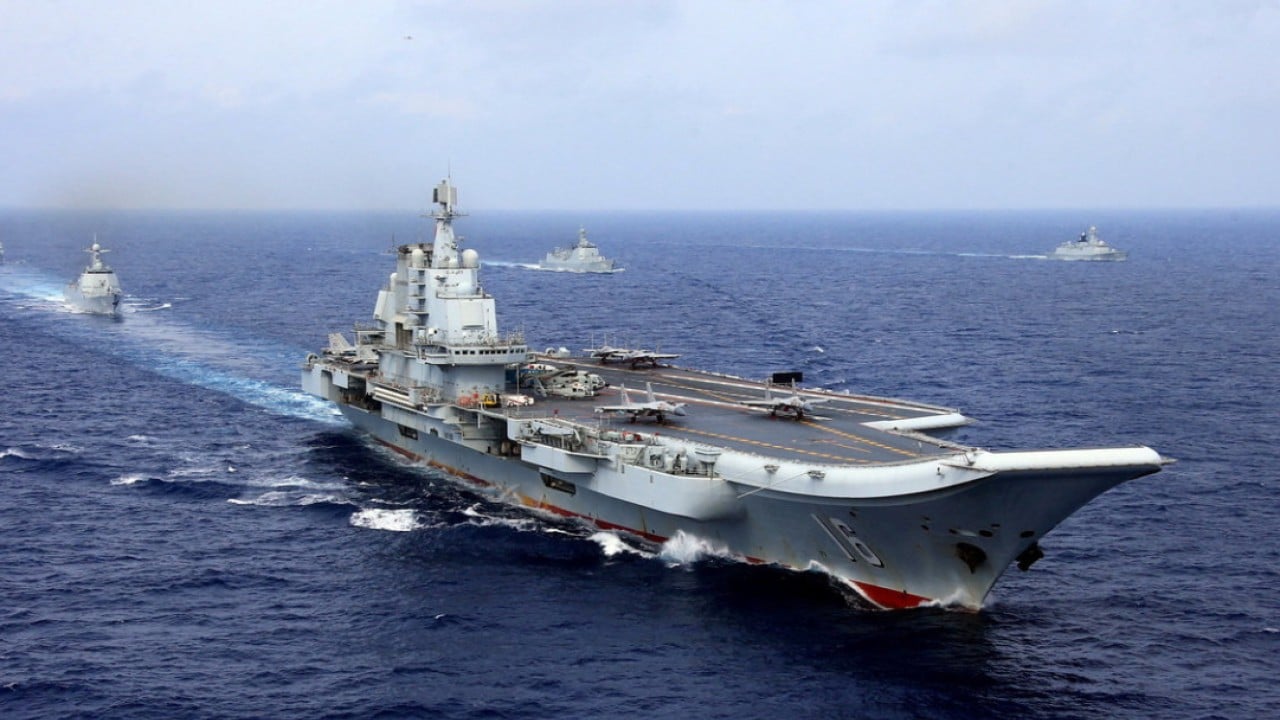
Warships don't sail into the western Pacific by accident. When Beijing dispatches an entire aircraft carrier strike group just as allied forces gear up for massive exercises, military planners take notice.
China's People's Liberation Army Navy sent the Liaoning aircraft carrier strike group into the western Pacific for routine training. But timing is everything in geopolitics. This naval deployment coincides with preparations for major joint military maneuvers between the United States and Japan, specifically the upcoming Keen Sword 27 drills.
The Timing Behind the Western Pacific Deployment
You can't look at naval movements in isolation. The Liaoning’s latest voyage represents its second major Pacific drill phase of the year. While the Chinese Ministry of National Defense maintains that these exercises form part of an annual routine plan compliant with international law, the operational context speaks volumes.
The upcoming Keen Sword 27 maneuvers involve roughly 45,000 Japanese personnel, thousands of vehicles, dozens of ships, and hundreds of aircraft, alongside roughly 12,000 US service members. These drills stretch across Japan and adjacent waters, hitting close to the southwestern chain of islands near Taiwan.
On Yonaguni Island—situated a mere hundred kilometers from Taiwan—the United States plans to deploy the NMESIS anti-ship missile platform and the MADIS air defense system for the first time. Meanwhile, Japan is positioning Type 88 anti-ship missiles and Type 03 medium-range surface-to-air missile systems in the area.
When allied forces stack missile batteries on islands flanking critical waterways, Beijing responds by showing its blue-water capability.
What the Liaoning Bring to the Table
The Liaoning isn't just a training hull anymore. Over the past few years, the People's Liberation Army Navy has transformed this former Soviet ship into a functional combat asset. Carrier-based J-15 fighter jets routinely conduct flight operations, pushing further out into international waters and testing regional air defenses.
Last December, operational friction turned tense when a J-15 fighter jet taking off from the Liaoning directed its radar onto a Japanese Air Self-Defense Force F-15 fighter. That aircraft was flying a routine surveillance mission over high seas southeast of Okinawa. Incidents like that highlight the fragile reality of overlapping patrols in the Indo-Pacific.
When the Liaoning moves into the western Pacific, it signals Beijing's intent to contest anti-access and area-denial zones. Analysts note that China wants to prove its carrier strike groups can break through the first island chain and operate effectively in the broader Pacific basin, denying adversaries uncontested control during a potential contingency.
Regional Calculations and Deterrence
Tokyo and Washington are tightening their defensive perimeter. By deploying advanced missile platforms to the Nansei Islands, the US-Japan alliance aims to close defensive gaps and secure choke points.
Beijing's counter-move with the Liaoning is designed to push back against that encirclement. It forces allied naval and air forces to split their attention between monitoring land-based missile deployments and tracking a moving carrier strike group offshore.
This is chess at sea. Every carrier deployment, every missile battery placement, and every radar lock adds pressure to an already volatile theater.
Keep an eye on how long the Liaoning stays out and how close it ventures to allied exercise zones. That duration will tell you everything you need to know about where regional friction heads next.
LIVE: Japan Monitors China's Liaoning Carrier Drills in Western Pacific
This video provides live coverage and analysis of Japanese monitoring efforts regarding the Liaoning aircraft carrier's movements in the western Pacific.
http://googleusercontent.com/youtube_content/1



