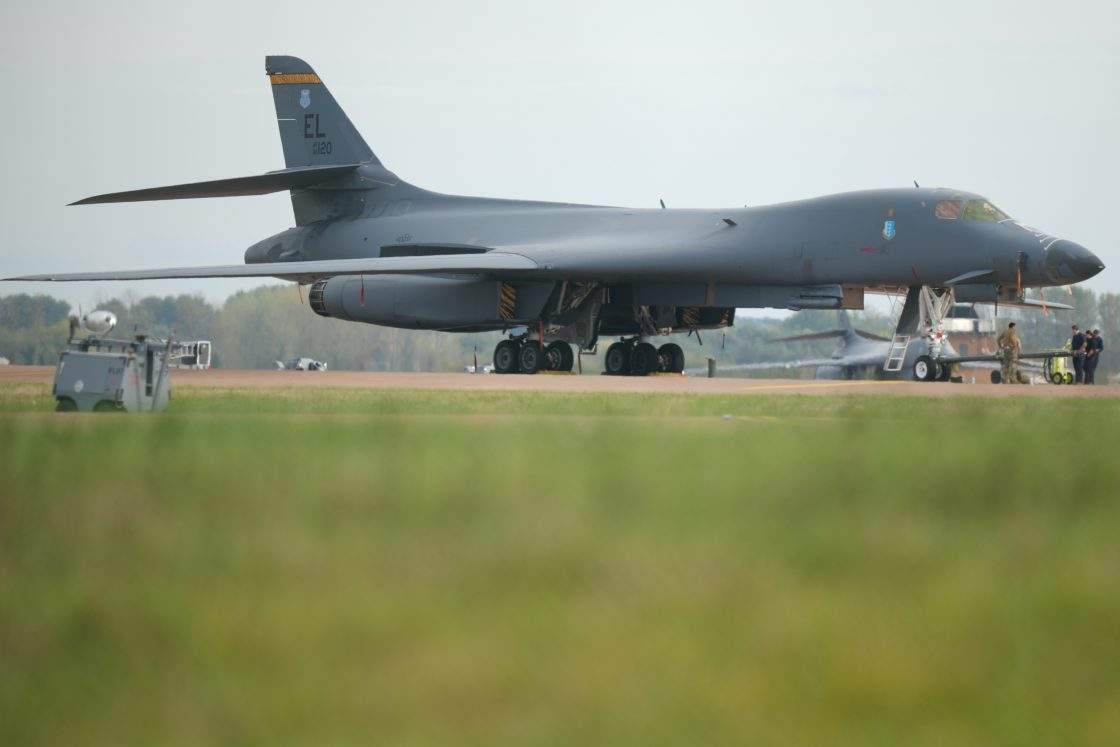
Foreign interference isn't just about cyber espionage or ballot box meddling anymore. Sometimes, it looks like a violent sabotage plot unfolding right on a military runway in the United Kingdom.
Canada has officially joined more than two dozen international partners in condemning Tehran's fingerprints on a foiled attack targeting RAF Fairford. British authorities pinned the September plot directly on the Islamic Revolutionary Guard Corps. Now, Western governments are trying to figure out how to stop foreign actors from turning domestic soil into proxy battlegrounds.
What Happened at RAF Fairford
Late last month, British security agencies disrupted a suspected terror plot at RAF Fairford, a military airfield in England utilized by American heavy bombers. British Prime Minister Andy Burnham stated publicly that the operation was almost certainly directed by Iran.
The plot wasn't just a random threat. Investigators uncovered a mix of lethal plotting, arson, cyber disruption, and covert sabotage networks designed to project foreign hostility far beyond Iranian borders. Seven men were arrested in connection with the investigation, though all suspects were quickly released on bail without immediate charges. That swift release sparked plenty of frustration among security analysts who wonder if modern legal frameworks are equipped to handle hybrid warfare threats.
The Global Response and the Canada Factor
Ottawa didn't stay quiet. Alongside the United States, France, Germany, Australia, and other allies, Canada signed a joint statement putting Tehran on notice.
The coalition made it clear that any state-backed attempt to target journalists, dissidents, Jewish communities, or military installations on allied territory crosses a red line. Governments are promising a unified front to identify, investigate, and prosecute anyone acting as a proxy agent.
Iran has denied direct involvement in the specific air base plot. However, Tehran has openly maintained that any foreign military installation used to launch strikes against its territory is a legitimate target. That stance leaves very little room for diplomatic cooling.
Why Hybrid Warfare Poses a New Challenge
Traditional defense policies were built to stop invading armies or traditional missile strikes. They weren't designed for covert cells using local criminal networks, arsonists, and digital saboteurs.
When foreign operatives contract local proxies to carry out attacks, attribution becomes messy. Intelligence agencies spend weeks or months piecing together encrypted communications, financial trails, and travel logs before they can point fingers with absolute certainty. By the time governments issue joint condemnations, the suspects might already be walking free on bail due to strict evidentiary thresholds in domestic courts.
Western security officials are under immense pressure to tighten borders, monitor suspicious funding, and share intelligence faster than ever. If allied nations keep relying on standard peacetime policing to fight state-sponsored hybrid threats, plots like the one at RAF Fairford will keep slipping through the cracks.



