We spend most of our time arguing about quarterly earnings, local elections, or whatever tech trend happened to break this morning. Meanwhile, a group of thirty-five top global researchers spent three years quietly mapping out how civilization could actually collapse by the year 2100.
The resulting study, published by The Lancet Commission on 21st Century Global Threats to Health, doesn't sound like a cheerful read. It pinpoints seventeen distinct systemic risks threatening human survival and long-term health over the next seventy-five years. While extinction-level scenarios remain statistically low on any given Tuesday, the compounding nature of these threats changes the math entirely.
Let's look at what's actually on the table.
The Big Three Extinction Drivers
The commission highlights three primary existential threats capable of wiping out humanity or collapsing global society entirely before the century closes.
1. Artificial Intelligence and Autonomous Bioweapons
People love to debate whether artificial intelligence will steal graphic design jobs or write mediocre code. That is a distraction. The real danger highlighted by researchers involves the malicious misuse of advanced machine learning models to design novel biological pathogens.
When you combine automated code generation with accessible synthetic biology labs, the barrier to creating engineered pandemics drops significantly. If a bad actor or a runaway system synthesizes a highly contagious, highly lethal pathogen, containment becomes virtually impossible. We learned during recent global health events how fragile modern supply chains and public trust really are. A sophisticated, AI-driven bioweapon operates on an entirely different scale of destruction.
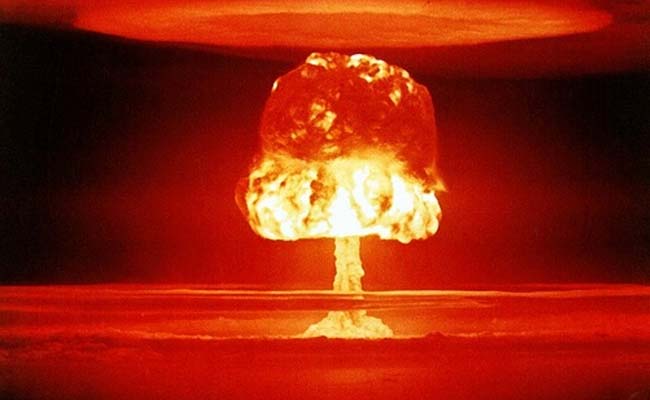
2. Nuclear Conflict and Nuclear Famine
Nuclear war never really left the geopolitical table, but the mechanics of how it ends humanity have evolved. Beyond the immediate blast zones and radiation fallout, researchers point to nuclear winter as the true species-level threat.
Even a regional nuclear exchange between major powers would loft millions of tons of black carbon soot into the stratosphere. That smoke would block sunlight for a decade, tanking global agricultural production and triggering worldwide famine. You don't need direct radiation poisoning to starve. When global grain yields drop to zero simultaneously, modern civilization stops functioning in a matter of weeks.
3. Accelerated Climate Feedback Loops
We treat climate change as a slow-moving political debate, but the physics do not care about election cycles. The Lancet report calculates that keeping global temperature warming around 1.8 degrees Celsius compared to 4.4 degrees Celsius prevents the loss of nearly two billion healthy life years.
Exceeding critical tipping points means runaway permafrost thaw, methane releases, and ocean current collapses. Once those feedback loops lock in, human adaptation strategies run out of runway.
The Quiet Killers We Ignore Daily
Catastrophic existential threats grab the headlines, but the commission spent equal time analyzing slower, systemic crises that destroy billions of healthy life years without triggering a single explosion.
- International Aid Collapse: A significant contraction in global health funding threatens to wipe out up to 1.5 billion healthy life years by 2100, with nearly seventy percent of those losses concentrated in sub-Saharan Africa where childhood malnutrition remains a structural crisis.
- Chronic Non-Communicable Diseases: In wealthier regions, obesity, poor mental health, and unhealthy aging drain healthcare systems dry. In lower-income regions, educational deficits and malnutrition lock generations into poor health outcomes.
- Antimicrobial Resistance: Medicine is quietly losing its baseline defenses against routine bacterial infections as common antibiotics lose their efficacy.
What Governments and Individuals Are Missing
Most political systems operate on a two-to-four-year election horizon. Preparing for a systemic collapse by 2100 requires long-term institutional foresight that simply does not exist in standard bureaucratic frameworks.
Prof. Christopher Murray, co-chair of the commission and director at the Institute for Health Metrics and Evaluation, noted that governments went into this research expecting to track three major issues: conflict, climate, and pandemics. Instead, they found a much larger, sprawling web of seventeen interdependent threats.
States need dedicated, well-funded independent agencies focused entirely on anticipation, prevention, and civil preparedness. Right now, most global superpowers spend billions reacting to crises after they detonate, while spending practically nothing on structural fortification.
How to Think About the Future
It is easy to read catastrophic reports, throw your hands up, and check out. That is a mistake.
Understanding these risks means supporting policies that prioritize biosecurity safeguards around open-source biological databases, strict arms control treaties for nuclear states, and aggressive decarbonization timetables. It also means building local community resilience—strengthening local food systems, securing clean water access, and reducing personal dependencies on fragile global supply chains.
The clock is ticking toward 2100. How we manage the next two decades will dictate whether civilization adapts or breaks.



