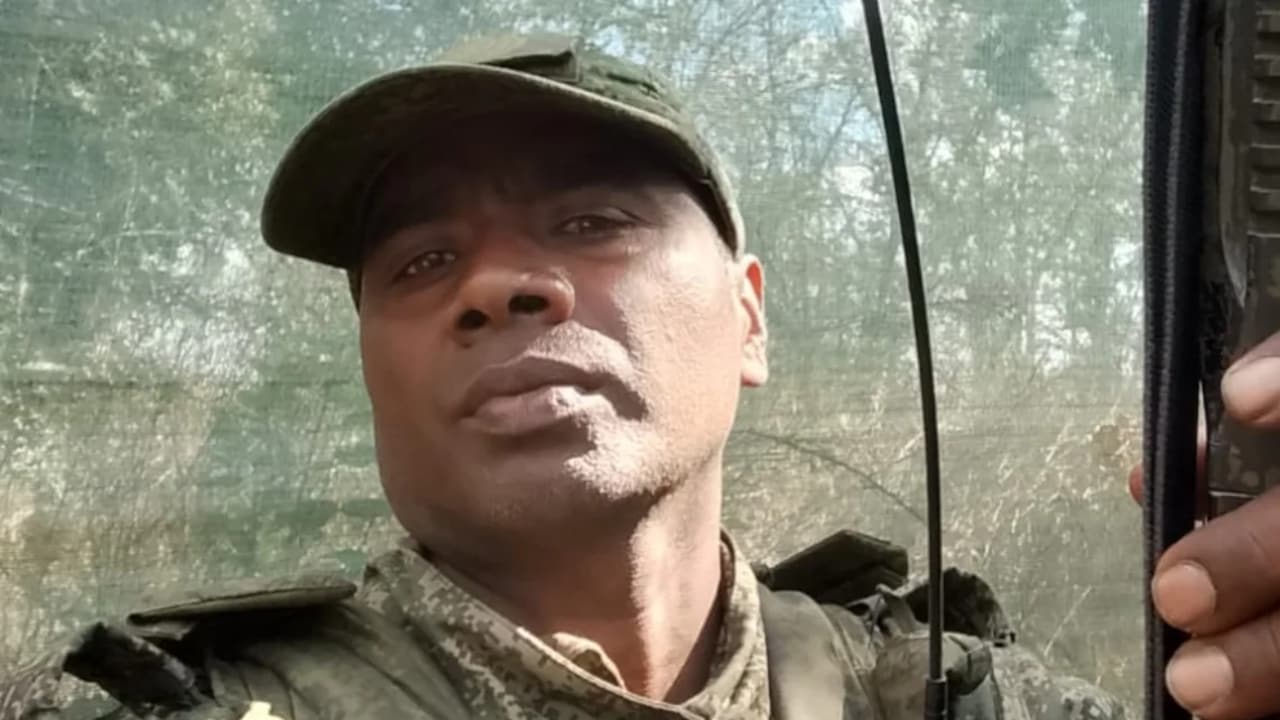
The phone call every family dreads arrived as a crackling voice message. Mohammed Afzal Khan, a 43-year-old father from a small town in Telangana, was reportedly dead on a foreign battlefield thousands of miles away.
His relatives didn't get a government telegram. They got a forwarded voice clip from another desperate Indian worker who had survived long enough to whisper the news.
Right now, Khan’s family in the Kamareddy district is locked in a agonizing waiting game. They are pleading with New Delhi to force official channels open, confirm the casualty, and bring him home. But behind this specific tragedy lies a wider, grim reality about how ordinary job seekers from rural India get sucked into foreign armed conflicts through deceptive recruitment traps.
How Routine Employment Searches Turn Fatal
Most people assume anyone fighting in a foreign military signed up for ideological reasons or huge paychecks. That assumption is dead wrong.
Look at what actually happens. Khan and three other men from Telangana—Bhukya Ravinder, Sirushu Ashok, and Megavath Prakash—left home looking for ordinary work. They wanted to escape local financial strain. Agents dangled promises of stable, well-paying jobs in the oil industry.
Instead, the pipeline led straight into military staging grounds.
According to family accounts, the men initially spent months doing low-level odd jobs like grass-cutting. They were paid intermittently, then left stranded without work or money. That vulnerability is where the trap snaps shut. Stripped of resources in a foreign country, they were allegedly nudged or coerced into military-support duties with false promises of quick citizenship and cash bonuses.
Once inside the system, the illusion of choice vanishes. Reports show men forced to handle explosives, pushed into active frontline zones, and subjected to physical punishment when they couldn't keep up.
The Scale of the Crisis
This isn't an isolated incident. It’s part of a massive, ongoing consular headache for the Indian government.
Ministry of External Affairs data reveals the sobering magnitude of this issue. Hundreds of Indian nationals have found themselves caught in similar web networks across the Russian frontlines. Scores have lost their lives. While diplomatic pressure and bilateral talks have secured the discharge and return of many citizens, the pipeline of deceptive recruitment remains stubborn and active.
Agents operating in local districts exploit economic desperation. They use social media, word-of-mouth networks, and fake travel agencies to promise European or Russian work permits that quietly convert into military auxiliary contracts upon arrival.
What Families Can Do When Communication Fails
When a relative goes silent near a conflict zone, standard bureaucratic paths move at a crawl. Families facing this nightmare usually go through a grueling sequence of events:
- Filing local police reports against fraudulent recruiting agents to establish a paper trail.
- Approaching state ministries and the Ministry of External Affairs with passport details, employment contracts, and agent contact info.
- Relying on community networks and surviving compatriots on the ground to relay real-time voice notes or geolocation data.
Yet, the core obstacle remains stark. Official confirmation from foreign military departments is notoriously difficult to secure during active hostilities. For Khan's family, the lack of an official body or an authenticated death certificate leaves them in a cruel limbo where they cannot even begin the mourning process properly.
The government's previous repatriations prove that pressure works, but speed is everything. Until local authorities crack down hard on the underground networks facilitating these fraudulent worker-to-soldier pipelines, families across rural India will keep paying the ultimate price for a simple job search.