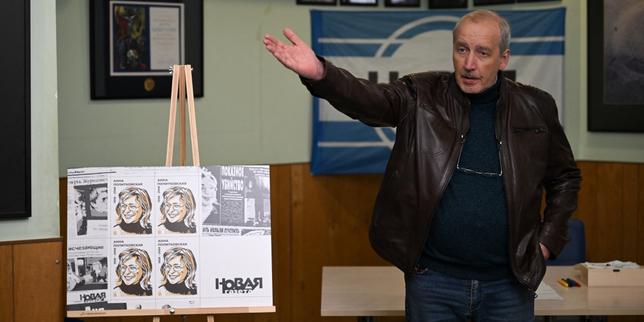
Independent journalism in Russia is hanging by a thread, and that thread is snapping. Sergueï Sokolov, the editor-in-chief of the renowned independent newspaper Novaïa Gazeta, recently found himself facing yet another intense interrogation following early-morning police raids at his Moscow home. If you’ve been following the systematic dismantling of press freedom under Vladimir Putin, this latest escalation shouldn't surprise you. But it should deeply alarm you.
Let's look at what actually happened, why the Kremlin is tightening the screws even further on what remains of independent reporting, and how the few remaining journalists continue to operate under a constant cloud of intimidation.
The Pressure Mounts on Novaya Gazeta
The raid on Sokolov’s apartment and subsequent interrogation represent the continuation of a relentless campaign. Novaïa Gazeta has long been a thorn in the side of the Russian establishment. Its investigative reporting on human rights abuses, corruption, and state overreach has always carried a heavy human cost. Think of Dmitry Muratov, the Nobel Peace Prize laureate and former editor, or the brave reporters who lost their lives over the years simply for doing their jobs.
Sokolov himself is no stranger to state hostility. He was previously targeted and detained under accusations related to discrediting the Russian armed forces. When authorities raided the publication's offices earlier in the year and detained journalist Oleg Roldugin, it became crystal clear that the nominal survival of the paper online does not mean its staff is safe.
Why Interrogations and "Foreign Agent" Labels Are Weapons
You might wonder why the authorities bother with interrogations and administrative harassment instead of a total, outright ban. The strategy is nuanced. By using the suffocating "foreign agent" designation, the state imposes crippling bureaucratic burdens, financial restrictions, and public stigma on independent outlets.
It turns journalism into a minefield.
- Every article is scrutinized for potential legal traps.
- Every source is put at risk.
- Every editor operates with the constant threat of a dawn raid.
This isn't about enforcing standard laws. It's about psychological warfare. The state wants to exhaust the editorial team, drain their resources, and send a chilling message to anyone else thinking of picking up an investigative pen.
The Cost of Telling the Truth in Modern Russia
Working for Novaïa Gazeta today requires a level of courage most of us can barely fathom. While a large portion of the editorial staff has chosen exile, launching spin-off projects like Novaya Gazeta Europe to keep truth-telling alive from abroad, those who stayed behind in Moscow walk a tightrope every single day.
They publish primarily online, navigating sweeping wartime censorship laws that criminalize factual reporting about military actions. When Sokolov walked out of his interrogation room, it wasn't a sign of leniency. It was a reminder that the sword is always hanging overhead.
If you want to support independent journalism, pay attention to these stories. Share work produced by outlets facing state censorship, support exile media initiatives, and refuse to let the silence win.



