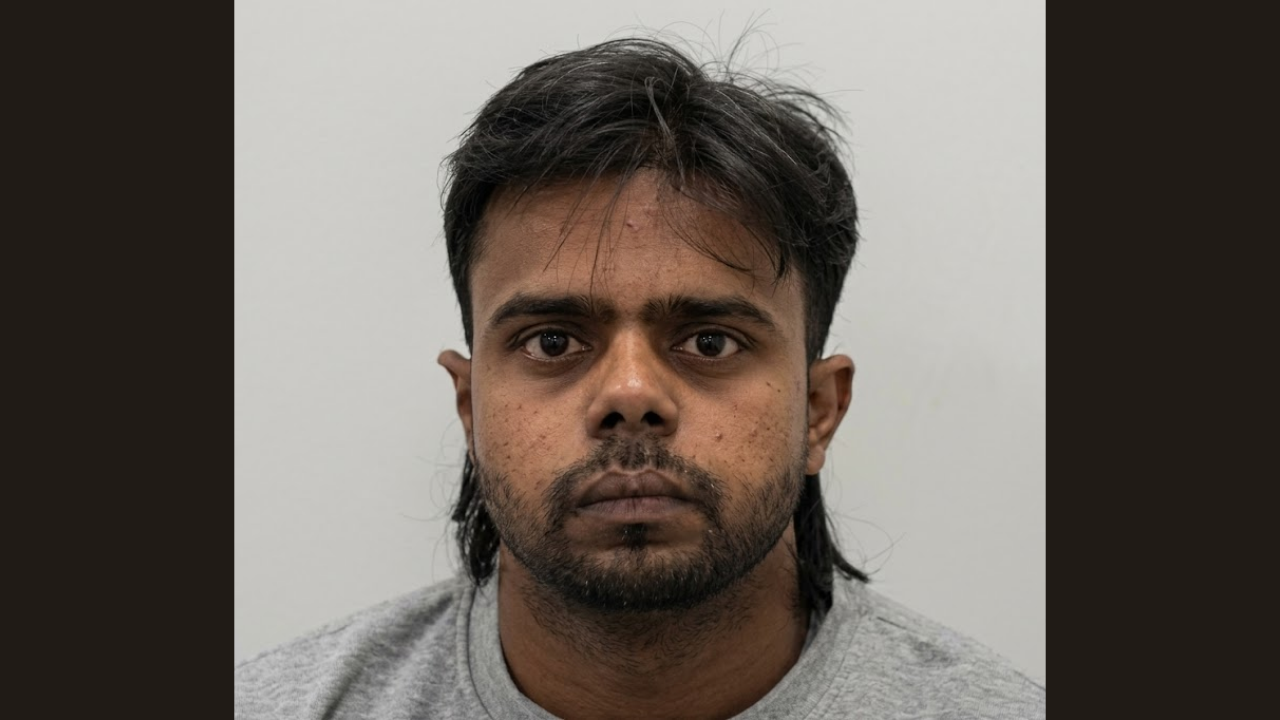
The Old Bailey courtroom didn't need any dramatic flair when the verdict came down. Deepak Sandhu, a twenty-four-year-old student who traded a university course for a spiral of desperation, was found guilty of murder.
If you followed the headlines, you saw the basic outline. An Indian national, a stolen five hundred pounds, a London Airbnb, and a fatal knife wound. But beneath the police blotter facts lies a darker look at how foreign student migration pathways, financial collapse, and unchecked personal obsession can collide with devastating speed.
How a Student Visa Pathway Turned Sour
Sandhu arrived in the United Kingdom in September 2024. His original mission was studying artificial intelligence at a university down in Southampton. It sounds like the typical story of global ambition—young person moves abroad for higher education, chasing career security in a tech-driven economy.
Reality hit fast. Poor attendance ruined his academic standing. Within six months, his student visa was revoked.
Instead of packing his bags and heading back home to India, Sandhu stayed. He slipped into the undocumented grey market of odd jobs, couch-surfing, construction labor, and financial reliance on family members back home. This is where many international students fall through the cracks of the UK immigration system. Once legal status vanishes, desperation takes over. Financial stress morphed into elaborate lies.
Sandhu began telling people he was an actor and a model. He claimed he was living with his sister in Southampton—who was actually thousands of miles away in India—and swore he had traveled to the United States for high-profile auditions. None of it was true.
The Fatal Conflict Over Stolen Money
Sandhu met thirty-nine-year-old Xiaoqing Ke through a Southampton venue where she worked and he was a customer. When Ke later moved to London, their paths crossed again.
The relationship broke down permanently over a stolen five-hundred-pound handbag theft. Ke discovered Sandhu had taken her money. She demanded repayment and made it clear she was done with his lies.
Prosecutor Caroline Carberry KC laid out the psychological dynamic clearly during the trial at the Old Bailey. Sandhu became an obsessed, manipulative figure who could not handle rejection. When confronted with his theft, he didn't just apologize. He spun more fantasies. He claimed he had been robbed at gunpoint in the US of thirty-five hundred pounds and promised a high-paying banking job that would clear his debts.
Ke wasn't buying it. Her text message to him cut straight through the noise: “Don't come see me. I'm clear, I'm not a fool.”
Instead of backing down, Sandhu escalated. He sent abusive messages, warned her former employer, and messaged associates on WhatsApp asking if he should take revenge.
Inside the Earls Court Airbnb Attack
On December 9, Sandhu traveled from Southampton to London carrying a concealed knife. Doorbell camera footage captured his arrival at Ke's Airbnb on Old Brompton Road in Earls Court. His face was covered by a baseball cap and a mask.
He spent roughly ninety minutes inside the bedsit. When police and emergency responders arrived later, they found Xiaoqing Ke dead with a deep stab wound to her neck.
Sandhu's attempt to evade justice was clumsy. He called his sister in India, booked a flight from Birmingham to Mumbai, and hopped on a National Express coach. British law enforcement caught up with him on December 12 before he could reach the airport.
During his testimony, Sandhu tried to project innocence. “I am not a dangerous man. I am not capable of killing,” he told the jury, claiming he waited in a laundry room while she saw a customer and insisting she was alive when he walked out.
The jury didn't buy the defense. After two hours of deliberation, they convicted him of both murder and attempting to pervert the course of justice.
Broader Lessons From the Tragedy
Cases like this force difficult conversations about migrant student oversight and systemic vulnerabilities in major Western cities. When visa enforcement fails to track dropouts rapidly, vulnerable individuals often drift into informal labor pools where protection is nonexistent and criminal exposure skyrockets.
If you are tracking international student welfare or examining how loneliness and financial pressure drive young adults into catastrophic choices, the details of Sandhu’s descent serve as a stark warning. Financial transparency, mental health support structures for struggling migrants, and stricter tracking of revoked visas are issues regulators continue to grapple with.
The legal process has run its course, and the sentence will follow. But the underlying systemic gaps remain wide open.



