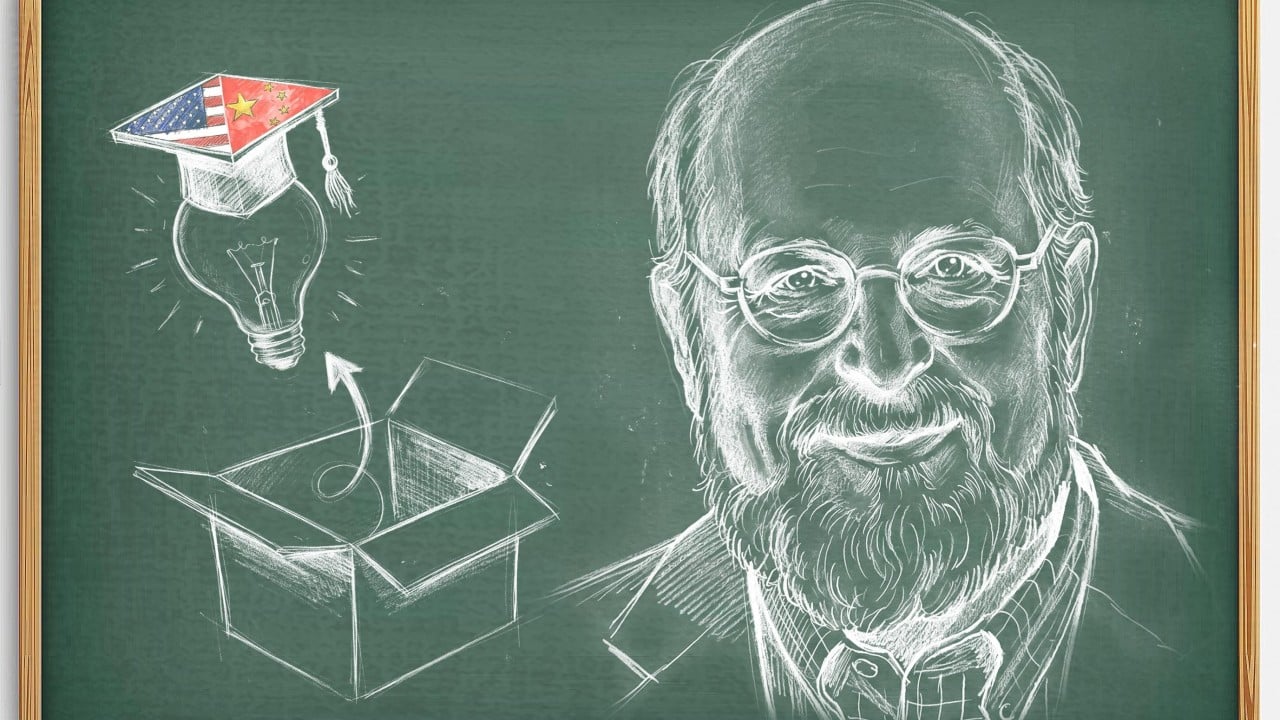
Geopolitics rarely feels abstract when you are sitting under fluorescent lights in a Beijing lecture hall. Headlines talk about tariffs, trade wars, and military posturing across the Pacific. Down on the ground, inside elite institutions like Tsinghua University, the reality looks remarkably human. Students aren't just reciting state talking points. They are trying to figure out how to navigate a splitting global order while worrying about their own job prospects and career paths.
If you only read mainstream policy journals, you might think academic exchanges have completely vanished. They haven't. But the atmosphere inside the room has shifted. Tensions that exist between Washington and Beijing bleed directly into seminar discussions. You see it in the way questions are framed, the careful choice of words during debates, and the quiet realization that the old era of easy academic cooperation is gone for good.
Why the Classroom Is the Best Barometer for Bilateral Ties
Wars and trade pacts start in capital cities, but their social friction shows up first in universities. Tsinghua University holds a unique spot in this equation. It is basically the training ground for China's technological and political elite. When a US scholar steps into that environment, the dynamic is immediate.
People assume Chinese students are entirely closed-minded or brainwashed by state media. That is lazy thinking. Most students at Tsinghua are hyper-pragmatic. They travel, they consume global media through virtual private networks, and they understand Western perspectives far better than most Westerners understand Chinese ones.
The friction comes from a deep sense of frustration. Students look at American visa restrictions, export controls on semiconductors, and political rhetoric in Washington, and they take it personally. They feel targeted by a system that they believe is trying to lock China out of future growth. When you teach international relations or economics there, you realize you aren't just delivering a lecture. You are managing a room full of brilliant young adults who feel deeply aggrieved by shifting foreign policies.
The Reality of Cross-Border Academic Exchange Today
Let us look at what is actually happening on the ground rather than relying on speculation. The number of Western academics and students based long-term in mainland China has plummeted compared to a decade ago. Compliance burdens are heavy. Funding is harder to secure. Bureaucratic hurdles have multiplied.
Yet, the people who stay do so because the intellectual engagement is worth the friction. In a typical seminar, discussions about global supply chains or technological decoupling spark intense debates.
- American students bring concerns about national security and institutional transparency.
- Chinese students counter with arguments about technological sovereignty and unfair Western containment.
- Both sides often talk past each other, relying on their respective domestic media narratives.
Bridging that gap requires abandoning polite academic pretenses. You have to call out biased assumptions on both sides. Honesty works better than diplomacy in a classroom setting. When students see an instructor willing to critique both Washington and Beijing, the guard drops. Real conversations begin.
Misconceptions About Intellectual Freedom in Elite Chinese Universities
Outsiders often imagine a Tsinghua lecture as a rigid exercise in ideological compliance. The reality is much more nuanced. Faculty members operate within clear boundaries regarding sensitive domestic political topics, but within those guardrails, the analytical rigor is fierce.
Students are trained to solve hard engineering, economic, and strategic problems. They do not have time for empty slogans when they are trying to model macroeconomic stability or design algorithms.
The real pressure isn't coming from local censors shouting down debate. It is coming from the macro environment. Young people in China face a cooling domestic economy and a fierce job market. When you add geopolitical hostility from the US, the psychological toll is heavy. They wonder if a degree from an elite Chinese university will become a liability on the global stage. That anxiety shifts the mood from theoretical curiosity to high-stakes pragmatism.
What Washington and Beijing Miss in Their Calculations
Policymakers in Washington love to talk about decoupling supply chains and separating academic research ecosystems. They treat universities like security threats. Back in Beijing, state planners emphasize self-reliance and domestic innovation as the only cure for foreign pressure.
Both approaches miss the human cost. Every time a joint research lab closes or a young scholar decides not to make the trip across the Pacific, mutual understanding takes a hit. We are building a world where the next generation of leaders in both superpowers will know almost nothing about each other firsthand. That ignorance breeds worse mistakes than policy disagreements ever could.
If you want to understand where US-China relations are heading, stop listening to think-tank panels in Washington or official press briefings in Beijing. Look at the career choices of twenty-something graduates in both countries. See whether they are still willing to learn the language, cross the ocean, and sit in a room with people they disagree with.
The connections are fraying, but they have not snapped completely. Maintaining those tiny threads of human contact is the only real counterweight to catastrophe.
Take a hard look at your own sources of information. Stop relying on sensational headlines designed to trigger outrage. Seek out primary voices, read local perspectives from both sides, and support institutions that keep international dialogue alive, no matter how messy it gets.