Football players trade teams, coaches get fired, and front offices churn through staff every single year. But the Denver Broncos have one superstar who never goes out of favor. Meet Thunder, the legendary live-action equine ambassador of Empower Field at Mile High.
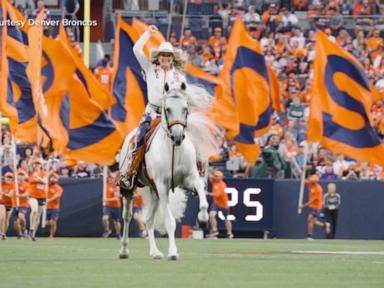
If you have ever watched a Broncos home game, you know the moment. The offense punches the ball into the end zone, the crowd erupts, and a magnificent grey horse gallops full speed down the turf. It is a tradition that spans over three decades, linking modern NFL spectacle back to the rugged roots of the American West.
The Evolution of a Mile High Icon
Most sports mascots wear oversized foam heads and tumble around the sidelines. The Denver Broncos chose a different path back in 1993. They introduced a real white Arabian horse named Thunder Sr., setting off a multi-decade tradition that few franchises can match.
Over the years, the hoofed ambassador role passed through carefully chosen equines. Thunder II and Thunder III took their turns carrying the franchise banner through AFC championship runs and Super Bowls. Thunder IV, known off the roster as Me N Myshadow, spent years anchoring the tradition before stepping down alongside long-time owner Sharon Magness Blake and veteran rider Ann Judge.
Transitioning a legendary mascot program is no easy feat. When the Thunder Spirit team retired after more than thirty years of service, the franchise faced a massive pivot. They needed someone who understood the immense gravity of the role.
Enter the new era of Thunder. The program transitioned to a fresh team led by veterinarian and program lead Dr. Kelly Tisher, alongside Elizabeth Tisher, trainer and rider Gretchen Flynn, and trainer Phillip Flynn. Stepping away from the traditional Arabian breed favored by the original era, the latest iteration features a stunning Andalusian stallion ready to greet fans and charge across the field.
What It Takes to Handle an NFL Stallion
Training a horse for an NFL stadium is an extreme equestrian challenge. You aren't dealing with a quiet trail ride or a controlled arena. You are asking a living animal to stay calm amidst seventy thousand screaming fans, explosive pyrotechnics, roaring jet flyovers, and flashing stadium lights.
It takes months of desensitization. Trainers expose candidates to loud speaker noises, flapping flags, and erratic crowd movements long before they ever step foot near the tunnel at Empower Field. Horses are prey animals by nature. Their instinct tells them to bolt when a loud noise hits. Overriding that instinct requires absolute trust between the horse and the handler.
The Game Day Routine
Preparation starts hours before kickoff. The equine team arrives early to let the horse acclimate to the quiet stadium bowl before the gates open. Grooming is meticulous. Every inch of coat is checked, manes are braided or styled, and hooves are conditioned for turf performance.
During the game, safety is the number one priority. Security personnel clear paths in the tunnel, and handlers monitor the animal's stress levels every single second. It is high-stress work, but the payoff comes when the crowd locks eyes with the majestic animal pacing the sidelines.
Why the Tradition Still Matters
In an era dominated by digital entertainment and virtual fan engagement, a real-life animal cuts through the noise. It grounds the modern sports entertainment machine in something tangible and breathing.
Players come and go. Contracts expire. Wins and losses pile up over grueling seventeen-game seasons. But seeing that majestic grey stallion thunder down the field reminds fans of why they fell in love with the game in the first place. It is raw, authentic, and completely unscripted.
The next time you catch a Broncos game and see that magnificent animal pounding down the turf, remember the decades of careful breeding, intense training, and behind-the-scenes dedication that made it happen. It is football tradition at its absolute finest.