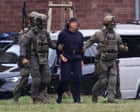
The courtroom in Hamburg looks like any other high-security chamber, but the stakes inside are unlike anything Europe has witnessed in decades. Serhii Kuznetsov sits in a dark blue hoodie, his face blurred for German privacy laws, facing charges that could change how the continent views its wartime alliances. He is a Ukrainian special forces officer, and he is on trial for blowing up the Nord Stream gas pipelines.
If you've been following the geopolitical fallout since the late September blasts back in 2022, you know this story runs much deeper than a single rogue operative. German federal prosecutors claim Kuznetsov acted as an accomplice to war crimes, helping plant four incendiary charges weighing up to 27 kilograms each at a depth of roughly 80 meters under the Baltic Sea near Bornholm. The alleged method reads like a thriller plot: a rented yacht, a crew of deep-sea divers, timer-controlled explosives, and a false passport used during a family holiday in Italy that ultimately ended in his arrest in August 2025 and subsequent extradition.
Ukraine denies any involvement. Kyiv says it had nothing to do with the operation. Yet the trial pushes Germany into an uncomfortable corner. Berlin remains one of Ukraine's staunchest financial and military backers, yet its own judicial system is now prosecuting a Ukrainian soldier for destroying critical energy infrastructure that once fed Russian gas directly into German industrial hubs.
The Mystery of the Baltic Sea Blasts
Back in 2022, when those underwater explosions ripped through Nord Stream 1 and the uncommissioned Nord Stream 2, the blame game was immediate. Finger-pointing bounced between Moscow, Washington, and various shadowy operatives. Western intelligence officials initially suggested a pro-Ukrainian commando group might be responsible, while Russian leadership pointed the finger straight back at the US and its allies.
German investigators changed the conversation last July by formally pointing toward Ukrainian state authorities, arguing the explicit goal was cutting off Moscow's gas revenue to choke off war financing. Kuznetsov's trial is the first major legal test of those accusations. Sixteen dates are locked in at Hamburg's higher regional court through mid-December, with hearings stretching into the new year.
Yet the defense strategy is already clear. Kuznetsov is expected to maintain his right to silence. His legal team plans to rely on affidavits from military superiors arguing that active-duty soldiers are prohibited from divulging operational details. Meanwhile, other suspects, like air conditioner installer and hobby diver Volodymyr Zhuravlyov arrested in Croatia, are fighting extradition tooth and nail.
Political Shockwaves Across Europe
You can't separate this trial from the domestic political pressure cooking across Europe. Far-right and pro-Kremlin factions, like Germany's Alternative für Deutschland, are using the courtroom proceedings to fuel their anti-aid narratives. They argue that Berlin should cut financial support to Kyiv and restore the ruined pipelines to ease the ongoing cost-of-living crisis.
Even the corporate players are circling. Gazprom tried to muscle into the Hamburg trial as a co-plaintiff, demanding a seat at the table over heavy economic losses. The court batted them away, ruling that while repair costs are astronomical, fixing the pipelines isn't technically impossible. Still, the ghost of past energy dependency lingers heavily over the proceedings, amplified by historical controversies like former Chancellor Gerhard Schröder's cozy ties to Vladimir Putin and Nord Stream AG.
This trial isn't just about a few damaged steel tubes 80 meters underwater. It's a stress test for European solidarity, testing whether the rule of law can peacefully navigate the brutal realities of modern proxy warfare without fracturing political alliances.
Watch how Berlin handles the verdict. The outcome will set a heavy precedent for how wartime sabotage is judged when allies find themselves sitting on opposite sides of a courtroom.



